
Using a Lubricant Eye Gel at Night: A Simple Bedtime Routine
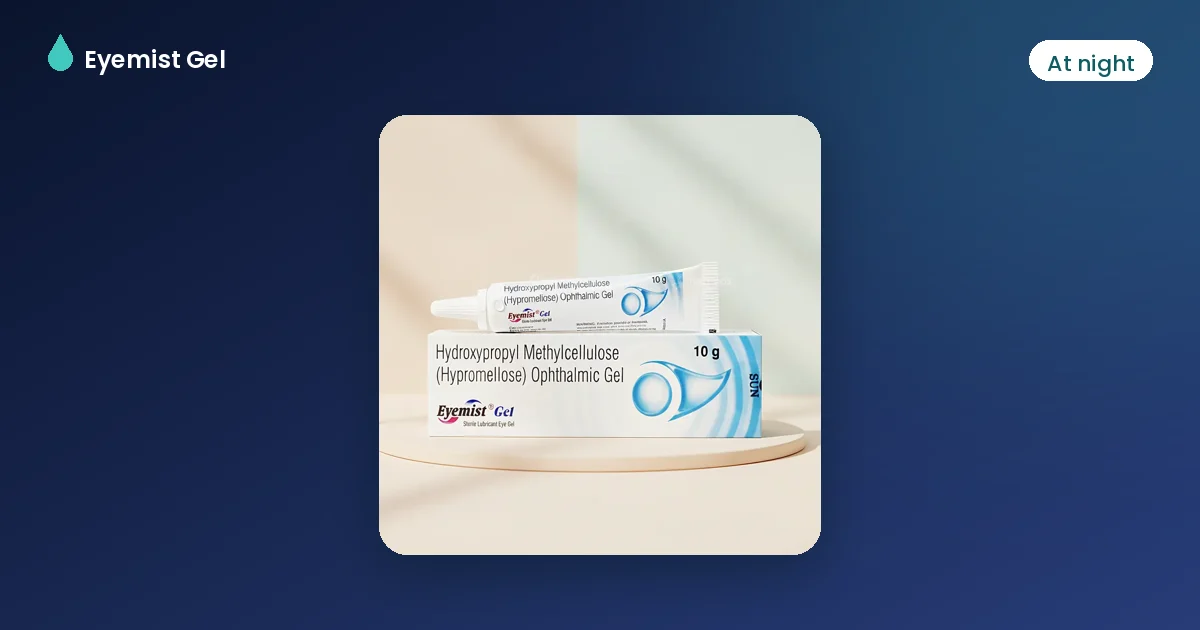
Eyes that feel fine at bedtime can feel dry and gritty on waking. This is one of the most common reasons people pick up a lubricant eye gel: a thicker format applied before sleep, when a moment of blurred vision does not matter. Here is why mornings can feel dry, a simple bedtime routine, and the habits that make the biggest difference.
Why eyes can feel dry when you wake up
- Dry bedroom air. Central heating in winter and air-conditioning in summer both pull moisture out of the air you sleep in for seven or eight hours.
- Airflow on your face. A ceiling fan, a bedside fan or an air vent aimed at the bed keeps air moving across your eyes all night.
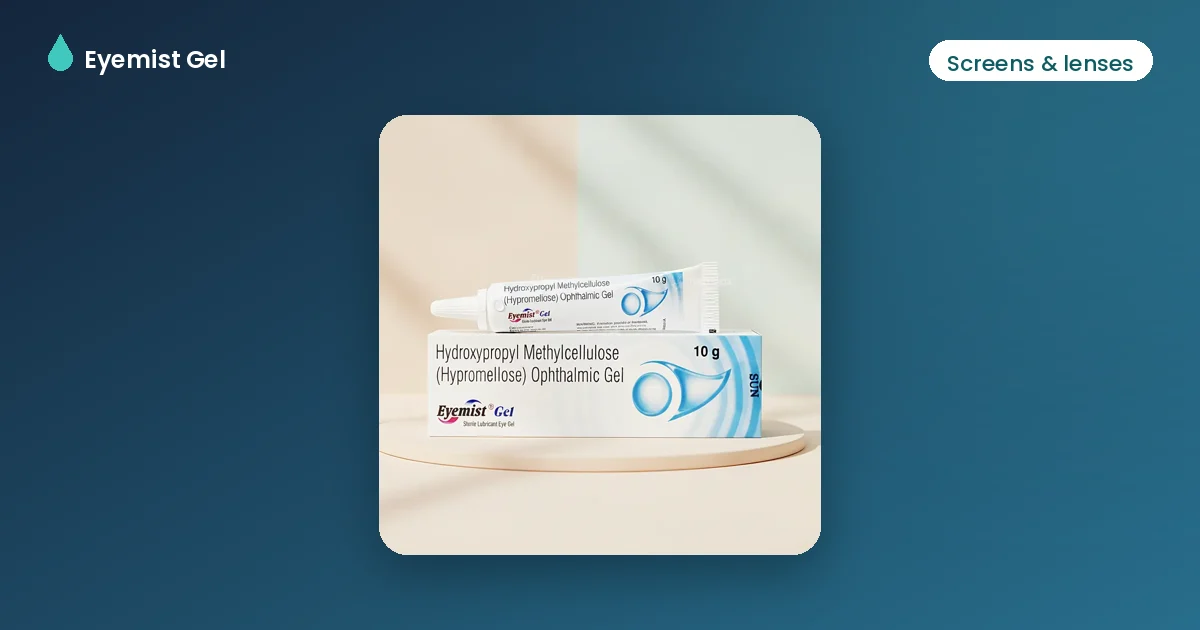
- Screens right up to bedtime. People blink less while focusing on a screen, so a late scrolling session can leave eyes already dry when you turn off the light. Our guide to dry eyes from screens and contact lenses goes into this.
- A long contact-lens day. Eyes often feel worn out after the lenses come out in the evening.
- Eyelids that may not close fully. Some people's lids stay slightly open during sleep. You may not notice it yourself. If a partner mentions it, or the dryness is worse in one eye, an eye-care professional should take a look.
Why many people choose a gel for the night
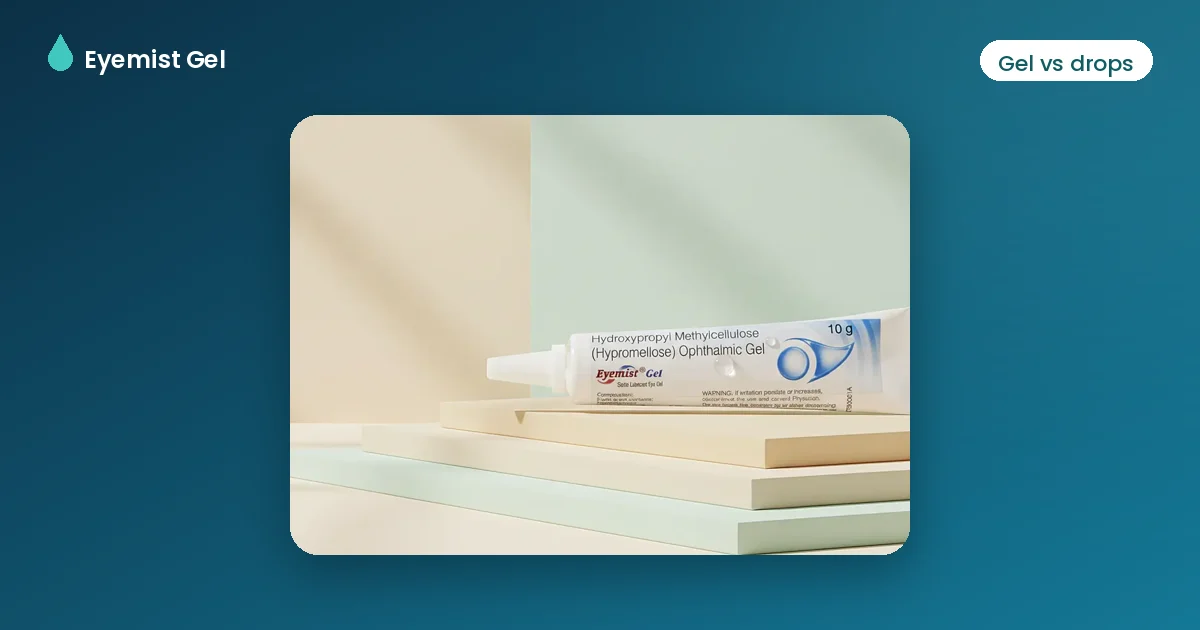
Thin drops are light and convenient during the day. A gel has a thicker texture that coats the surface of the eye. It can blur vision briefly while it spreads, which is a nuisance mid-task but irrelevant when you are about to sleep. That is the whole logic of using a nighttime eye gel. Eyemist Gel is a sterile lubricant eye gel with hypromellose (HPMC) 0.3%, labeled for the temporary relief of dryness of the eye.
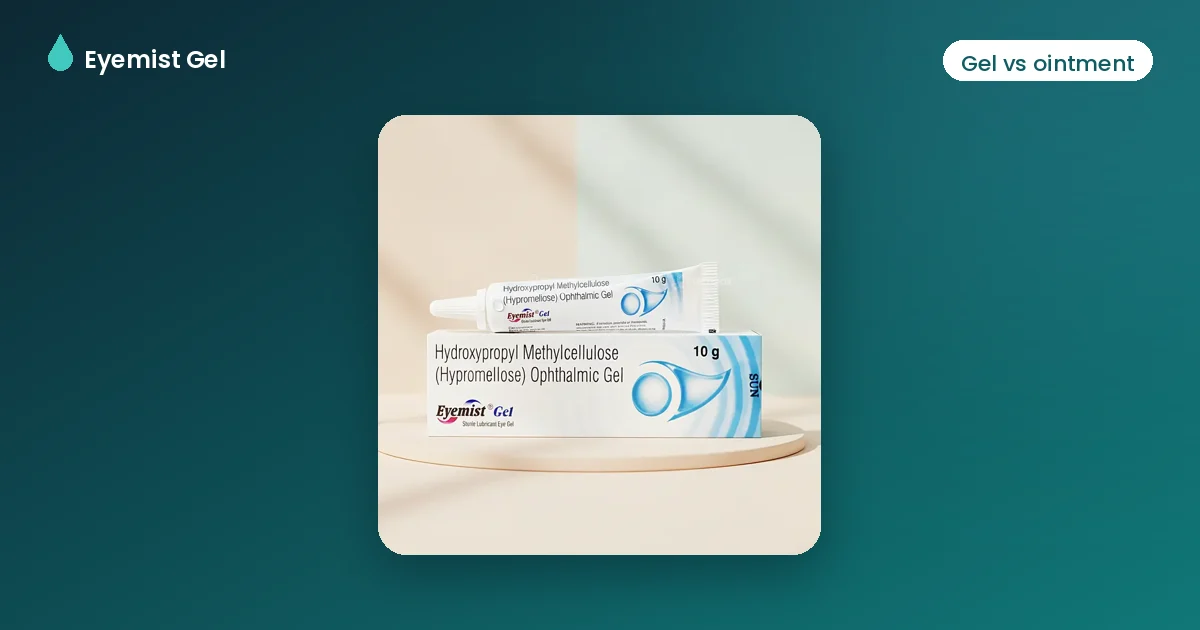
Some people use a greasy lubricating ointment at night instead. The two formats are compared in eye gel vs eye ointment.
A five-step bedtime routine
- Remove contact lenses and eye makeup first. Lubricant gels are not meant to go on over lenses unless the label says so.
- Wash your hands. Anything that touches the area around your eyes should be clean.
- Apply 1 or 2 drops of gel into the small pocket formed by gently pulling down the lower eyelid. Do not let the tube tip touch the eye, lashes or fingers.
- Close your eyes and blink slowly a few times to spread the gel.
- Replace the cap right after use, and store the tube as the label directs.
The illustrated directions on the Eyemist Gel page show each step.
Bedroom habits that help
- Add moisture to the air. A humidifier in the bedroom helps, especially when the heating is on.
- Redirect the airflow. Point fans and vents away from the bed.
- Put the screen down earlier. Even 20–30 minutes without a phone before sleep gives your blink rate a chance to recover.
- Keep the routine consistent. The same steps every night are easier to stick to than an occasional rescue.
In the morning
A little gel residue on the lashes after the night is normal. A clean, damp washcloth removes it. If your vision is still blurred long after you wake up, or your eyes feel worse rather than better, stop and talk to a professional.
When to talk to an eye-care professional
Stop use and ask a doctor if you have eye pain, changes in vision, or continued redness or irritation of the eye, or if the condition worsens or lasts more than 72 hours. Also check with a professional before starting a new eye product if you use prescription eye medication or have had eye surgery.
This article is general information, not medical advice.
A gel for your bedtime routine
Eyemist Gel: sterile hypromellose 0.3% lubricant eye gel in a 10 g tube. Free tracked US shipping, 60-day money-back guarantee.
See Eyemist GelRelated Articles
Eye Gel at Night: Frequently Asked Questions
Honest answers about Eyemist Gel — ingredients, how to use it, shipping, and returns.
Comments (0)
No comments yet. Be the first!