
Dry Eyes from Screens and Contact Lenses: What Actually Helps
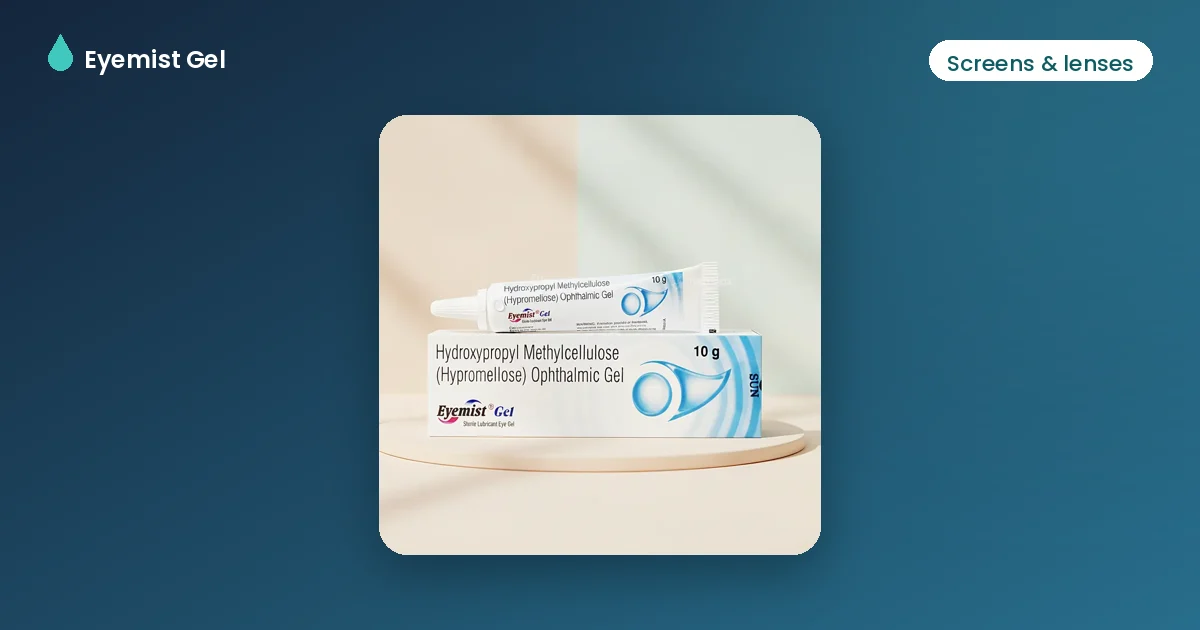
Eyes that feel fine at breakfast and sandpaper-dry by evening — that pattern usually is not a mystery. Long hours on screens, contact-lens wear and dry indoor air are three of the most common everyday drivers of dry, uncomfortable eyes. Here is why they do it, the habits that genuinely help, and where a lubricant eye gel fits into the routine.
Why screens dry your eyes out
When you concentrate on a screen, you blink less — and many of the blinks you do make are incomplete, so the tear film is not spread properly across the eye. Hours of that leave the surface under-lubricated, which you feel as burning, grittiness or heavy eyelids by the afternoon. The screen itself is not damaging your eyes; the missing blinks are the problem.
Contact lenses and end-of-day dryness
A contact lens sits in the tear film and shares its moisture all day. For many wearers that is perfectly comfortable — until the last hours of a long day, when eyes start to feel worn out. A common routine is to apply a lubricant gel after removing the lenses in the evening, giving the eye surface a moisture-holding layer for the night. If you wear lenses, ask your eye-care professional what fits your lens type and routine.
Dry air: heating, air-conditioning, travel
Winter heating, air-conditioned offices and aeroplane cabins all share one property: low humidity. Dry air speeds up tear evaporation, so even people who never notice their eyes at home get dry-eye symptoms in these environments. If your dryness spikes in winter or after flights, the air is a likely culprit.
Habits that actually help
- Take blink breaks. The popular 20-20-20 rhythm — every 20 minutes, look at something 20 feet away for 20 seconds — is really a blinking break. Use it to close your eyes fully a few times.
- Position the screen lower. Looking slightly downward narrows the eye opening and slows tear evaporation.
- Humidify. A humidifier in the room you spend most time in offsets heating and air-conditioning.
- Follow your lens schedule. Wearing lenses longer than intended is a classic end-of-day dryness driver.
- Lubricate deliberately. Thin drops for quick top-ups during the day; a gel when you need the relief to last — the differences are covered in our eye gel vs eye drops comparison.
Where a lubricant eye gel fits
A hypromellose gel such as Eyemist Gel is a sterile lubricant eye gel labeled to relieve dryness of the eye, with a thicker texture than liquid drops — a format many people choose at the end of the day:
- The evening application: when eyes feel dry at the end of the day, 1 or 2 drops of gel relieve the dryness.
- Overnight: many people apply a gel before bed for dryness that shows up overnight or in the morning.
- Travel days: a 10 g tube fits any bag for the days when the air around you is dry.
The product page lists the everyday scenarios where Eyemist Gel helps and the labeled uses from the drug-facts panel. If you are comparing different gels first, start with our label checklist for choosing a lubricant eye gel.
This article is general information, not medical advice. If dryness persists or worsens, or if you have eye pain or vision changes, see an eye-care professional.
Make evenings easier on your eyes
Eyemist Gel — sterile hypromellose 0.3% lubricant eye gel to relieve dryness of the eye. Free tracked US shipping.
Shop Eyemist GelRelated Articles
Screens, Lenses & Dry Eyes — Frequently Asked Questions
Honest answers about Eyemist Gel, ordering and everyday use.
Comments (0)
No comments yet. Be the first!