
Eye Strain Relief: Practical Steps for Tired, Overworked Eyes
Eye strain relief starts with changing how you use your eyes, not just what you put in them. Adjusting screen distance, lighting, blink rate and break timing — paired with a lubricating drop or gel for dryness — usually eases tired, overworked eyes within a day or two. If it doesn't, that's a signal to check in with an eye doctor.
Key takeaways
- Most eye strain comes from close, fixed-focus tasks like screens, reading or driving — not disease.
- Screen position, lighting and blink rate are free fixes you can apply in minutes.
- Lubricating eye drops or gel ease the dryness that often rides along with strain.
- An outdated glasses or contact lens prescription can make every other fix fall short.
- Pain, vision changes, or symptoms lasting beyond 72 hours mean it's time to see an eye doctor.
What are the fastest steps to relieve eye strain?
Eye strain, sometimes called asthenopia, shows up as soreness, burning, blurred vision or trouble keeping your eyes open after reading, driving or staring at a screen for a long stretch, according to the Cleveland Clinic (2023). The steps below work in order: fix the setup first, then the habits, then the dryness.
Before you start, run through this short checklist:
- Wash your hands if you plan to use eye drops or touch your eyes.
- If you wear contact lenses, check the drop or gel label — some require you to remove lenses first.
- Have a mirror, a tape measure or just your forearm (for distance), and a lubricating drop or gel within reach.
- If you've had recent eye surgery, an eye injury, or you use prescription eye drops, ask an eye-care professional before adding a new product.
Each step below takes a few minutes. Together they rarely take more than fifteen.
How do I fix screen distance and height?
Step 1: Set your screen distance. Push your monitor or laptop back to roughly an arm's length away. Sitting too close forces your eye muscles to hold a tighter focus for hours, which is one of the common drivers of strain the Cleveland Clinic lists above.
Step 2: Lower the screen top to eye level or just below. Looking slightly down keeps your eyelids more closed, which slows tear evaporation. Looking up or straight into a tall monitor keeps the eye more open and dries faster.
What's the right distance for a laptop versus a desktop monitor?
A laptop screen is smaller, so people lean in closer than they would to a desktop monitor — often without noticing. If you work on a laptop for long stretches, consider an external keyboard so you can push the screen back to that arm's-length distance without losing the ability to type comfortably.

What lighting changes reduce eye strain?
Step 3: Match your screen brightness to the room, not the other way around. A bright screen in a dark room forces constant pupil adjustment; a dim screen in a bright room makes you squint. Set room lighting first, then nudge screen brightness until the page looks comfortable, not glaring.
Overhead glare and reflections off a glossy screen push people to tilt their head or squint for long stretches, which adds to muscle fatigue around the eyes and brow. Angling the screen away from windows or overhead lights, or adding a matte screen filter, removes that extra effort.
How many breaks do I need, and how often?
Step 4: Build in a short break on a timer, not on memory. Set a recurring reminder on your phone or computer rather than trusting yourself to notice the strain building up — by the time you feel it, the muscles have already been working too long.
What is the 20-20-20 rule?
The American Academy of Ophthalmology recommends looking at something roughly 20 feet away for about 20 seconds every 20 minutes of close work. Shifting focus that far lets the small muscles that control the eye's lens relax, the same way standing up relaxes a stiff back after sitting. It costs nothing and needs no equipment — just a window or a hallway to look down.
Why does blinking matter, and how do I do it more?
Step 5: Blink fully and on purpose, especially during screen work. People blink less often — and less completely — when they're focused on a screen, which lets the tear film thin out faster between blinks. A full blink, where the lids touch all the way, spreads tears evenly and clears debris from the surface of the eye.
Try this: every time your break reminder goes off, add ten slow, deliberate full blinks before you look away. It takes under a minute and resets the tear film across the eye's surface.

When do lubricating eye drops help with eye strain?
Step 6: Add a lubricating drop or gel if dryness is part of the discomfort. The Cleveland Clinic notes that treatment for eye strain “can involve using lubricating eye drops frequently and changing how you work,” alongside the setup changes above. A demulcent — a substance that forms a thin, soothing layer over the eye's surface — such as hypromellose (also called HPMC) can help relieve the burning and irritation that come from a dry eye surface, as stated on its DailyMed Drug Facts label.
Gel or drops — which fits a workday?
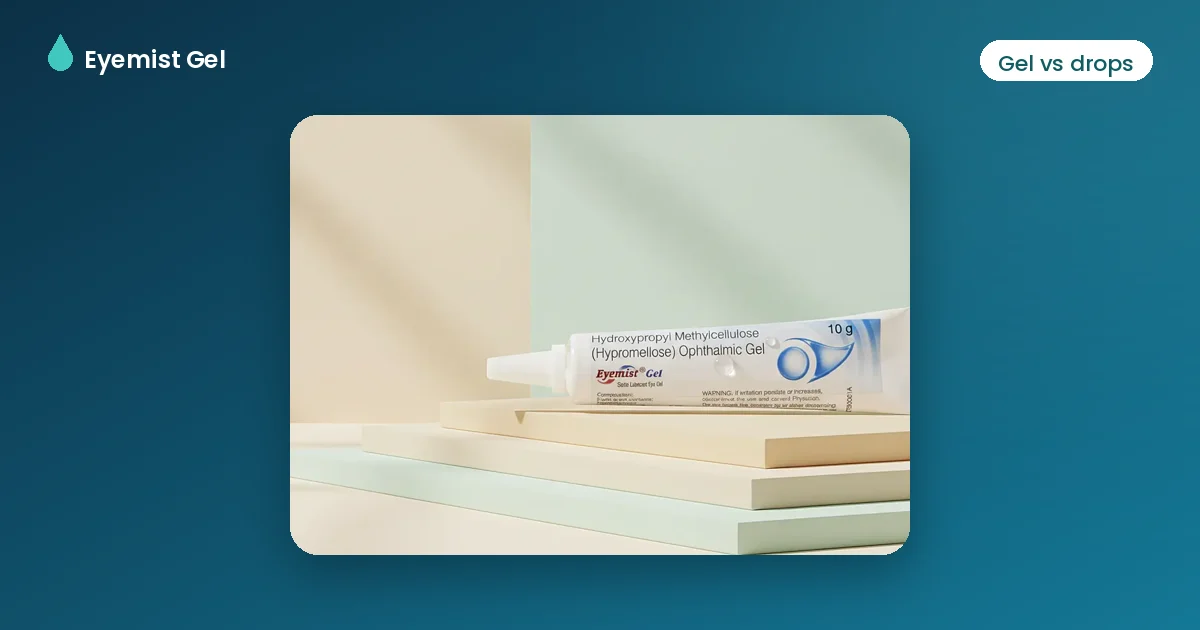
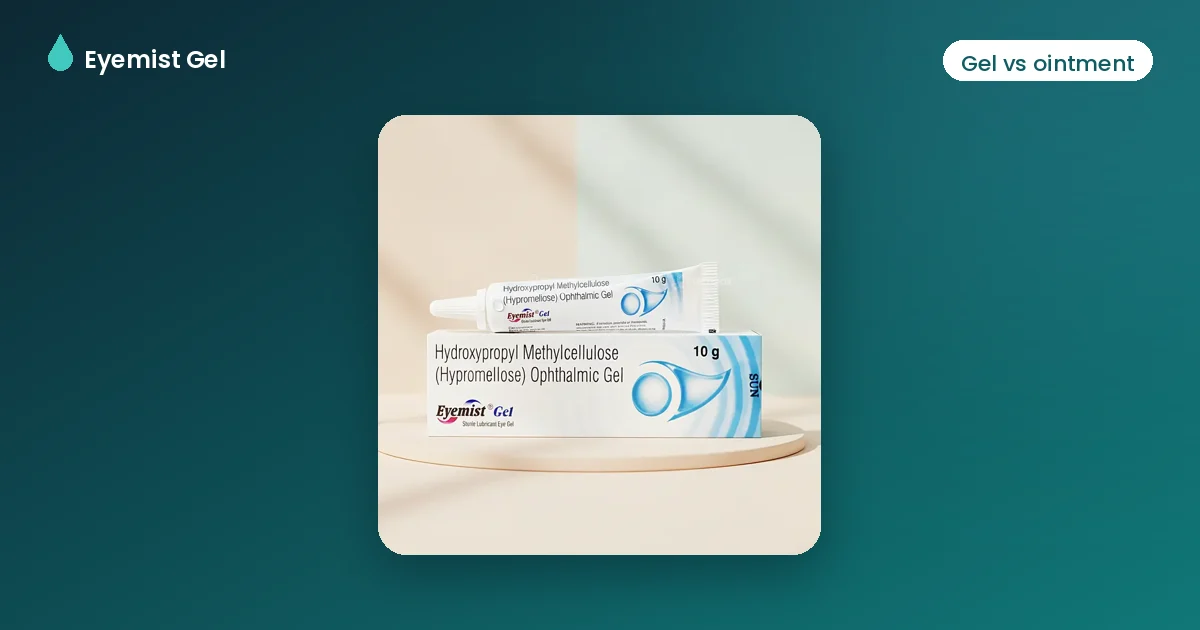
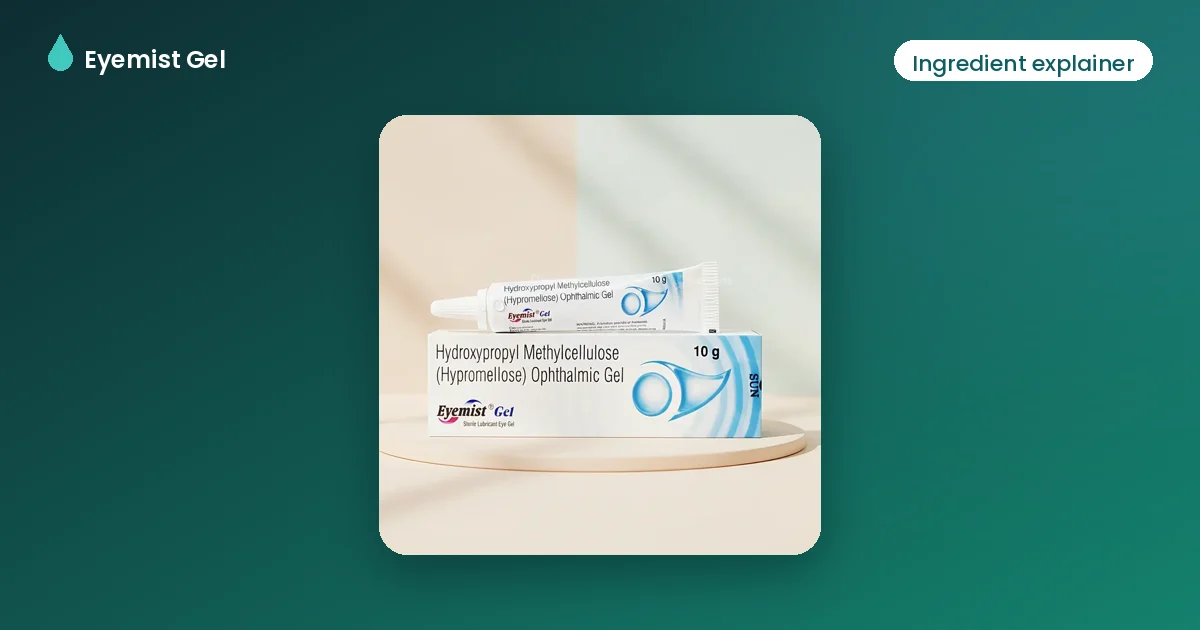
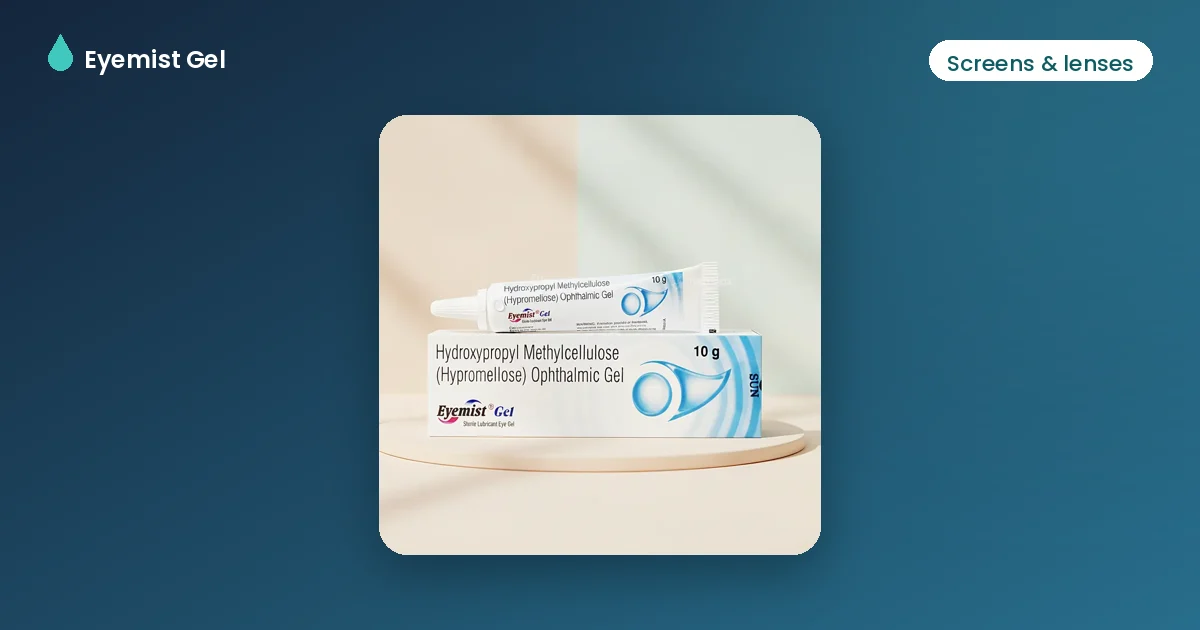
A thin drop tends to clear quickly, which suits mid-day use at a desk. A thicker gel, like Eyemist Gel, a sterile hypromellose 0.3% lubricant eye gel, sits on the eye longer and can blur vision briefly right after application — most people reserve a gel for evenings, breaks away from the screen, or right before sleep. Always follow the directions printed on the product's own label, including how often it may be reapplied.
Could glasses or an eye exam be the real fix?
Step 7: Check your glasses or contact lens prescription. Squinting to compensate for blur is its own source of fatigue. If your glasses are more than a couple of years old, or you've started holding your phone or book farther away to read it clearly, that's a sign the prescription may no longer match your eyes.
In our experience stocking eye-care products, the question customers ask most often isn't about the drop itself — it's whether a drop can replace an eye exam. It can't. A lubricant relieves the dryness on the eye's surface; it says nothing about focusing power.
When should I see an eye doctor about eye strain?
Stop using any over-the-counter drop or gel and see an eye doctor if you have eye pain, a change in vision, redness or irritation that continues, or symptoms that get worse or last more than 72 hours. Anyone recovering from eye surgery, with an eye injury or infection, children, and people already using prescription eye drops should check with an eye-care professional before adding a lubricant. Headaches that consistently follow screen work, or strain that doesn't ease with the steps above within a day or two, are also worth mentioning at an exam — according to the MedlinePlus overview of eye care, a routine exam is the standard way to rule out an uncorrected vision problem behind ongoing eye fatigue.
| Step | Main target | Tool needed | Typical time |
|---|---|---|---|
| Screen distance & height | Focus muscle load | Tape measure or your arm | 2–3 minutes |
| Lighting adjustment | Glare & pupil effort | Lamp, blinds, screen filter | 5 minutes |
| Timed breaks (20-20-20) | Sustained focus fatigue | Phone or desktop timer | 20 seconds, every 20 minutes |
| Deliberate blinking | Tear film thinning | None | Under 1 minute |
| Lubricating drop or gel | Surface dryness | OTC lubricant per label | As directed on label |
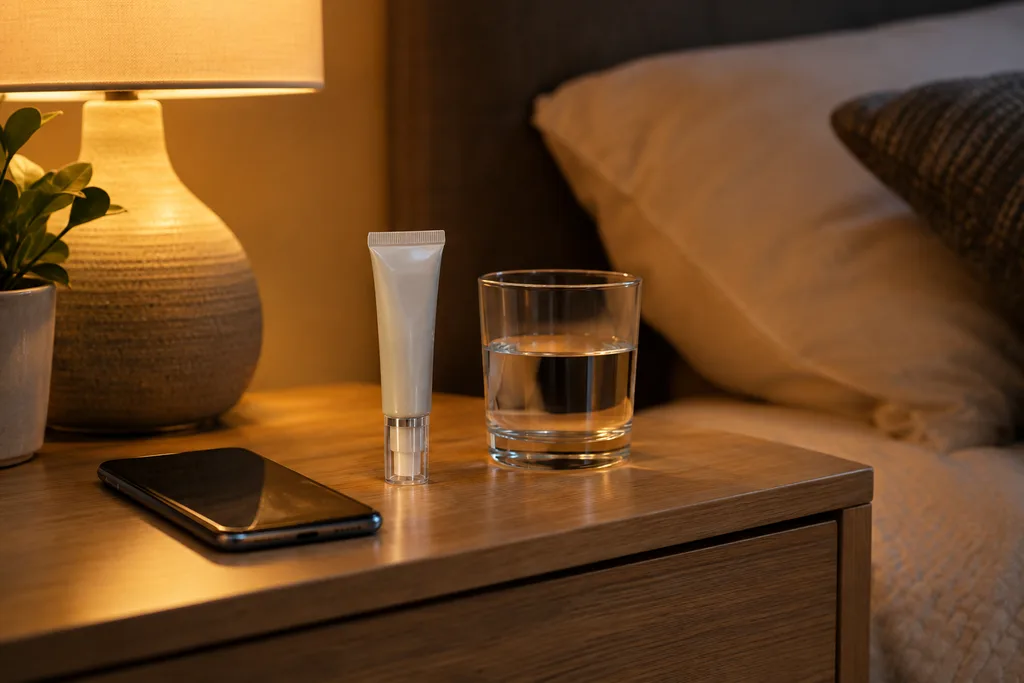
If dryness is the piece of your eye strain that lingers after you've fixed distance, lighting and breaks, a sterile lubricant gel like Eyemist Gel is built for exactly that — temporary relief of burning and irritation due to dryness of the eye, used according to its label.
This article is for general information and is not medical advice. Always read and follow the product label, and talk to an eye doctor if your symptoms persist or worsen.
Related Articles
Frequently Asked Questions
Honest answers about Eyemist Gel — ingredients, how to use it, shipping, and returns.
The quickest relief usually comes from stepping away from close-focus work: look at something roughly 20 feet away for about 20 seconds, blink fully a few times, and adjust your screen distance and lighting before returning to the task. If dryness is part of the discomfort, a lubricating eye drop or gel used according to its label can ease the burning or irritation alongside these habit changes.
Eye strain from a single long task, like a few hours of screen work or driving, typically eases within minutes to a few hours once you rest your eyes, adjust lighting, and blink more. If discomfort persists for more than 72 hours despite these changes, or it returns daily, it's worth getting an eye exam to rule out an uncorrected vision problem or another cause.
Lubricating eye drops and gels address the dryness component of eye strain, not the muscle fatigue from focusing. A demulcent ingredient such as hypromellose forms a thin layer over the eye's surface that can relieve burning and irritation due to dryness, per its Drug Facts label. They work best combined with screen setup changes and regular breaks, not as a stand-alone fix.
Current evidence does not show that screen use or temporary eye strain causes permanent eye damage. Cleveland Clinic describes eye strain as uncomfortable but usually not serious, and symptoms typically resolve with rest, setup changes, and lubricating drops. Persistent or worsening symptoms should still be checked by an eye doctor, since they can occasionally point to an unrelated vision issue.
A widely used guideline from the American Academy of Ophthalmology suggests shifting focus to something about 20 feet away for roughly 20 seconds every 20 minutes of close screen work. Setting a recurring timer makes this easier to keep up through a full workday, since the urge to take a break often arrives only after strain has already set in.
Comments (0)
No comments yet. Be the first!