
Eye Drops for Tired Eyes: Choosing a Lubricant for Long Days

Eye drops for tired eyes work best when you match the formula to the actual cause behind the discomfort. Most “tired eye” symptoms after screens, driving, or a long shift are really dryness — the eye isn’t fatigued, its tear film is thin and unstable. A lubricant drop or gel that supplements that tear film is the logical starting point before trying anything else.
Key takeaways
- Burning, grittiness, and heaviness by late afternoon usually signal dryness, not true muscle fatigue.
- Thin drops suit daytime use; thicker gels suit nighttime because they sit longer but blur vision briefly.
- Preservative-free single-use vials are the safer pick if you reapply more than a few times a day.
- The Drug Facts label — not the marketing copy — tells you the active ingredient, strength, and real directions.
- Persistent pain, vision changes, or symptoms past 72 hours mean it’s time to call an eye doctor.
When Is Eye Fatigue Actually Dry Eye?
Tired eyes and dry eyes overlap more than most people assume. A reduced blink rate during screen work lets the tear film evaporate faster, so the same hours that cause visual fatigue also cause the stinging, grittiness, or a heavy feeling behind the lids. The National Eye Institute describes dry eye as a condition where tears don’t provide enough lubrication, and that gap is exactly what an OTC lubricant is designed to address temporarily.
What Symptoms Point to Dryness Rather Than Simple Fatigue?
If closing your eyes for a minute fixes the problem, that leans toward fatigue. If the eyes still feel scratchy or burning even after rest, or if vision briefly blurs and clears with a blink, that pattern points more toward surface dryness. Redness that worsens through the day, without pain, is also typical of a tired, dry ocular surface rather than an injury.

Drops or Gel: Which One Fits Your Time of Day?
Thinner lubricant drops clear almost instantly and suit the middle of a workday, when you need comfort without blurred vision at your desk. Thicker gels, often built on hypromellose (HPMC) or carbomer, cling to the eye longer, which means fewer reapplications but a short period of blur right after you put them in. That is why gels are usually recommended for evening or bedtime use rather than before a drive.
Why Do Gels Blur Vision Temporarily?
A gel is simply more viscous than a watery drop, so it takes longer to spread evenly and longer for the eye to blink it into a thin layer. That short blur is expected and should clear within a few minutes; the label will note it as a possible effect. It’s one reason product guides, including this one, separate “desk-hours” formulas from “overnight” ones instead of treating all lubricants as interchangeable.
| Format | Typical viscosity | Best timing | Blur after use |
|---|---|---|---|
| Thin lubricant drop | Low | Daytime, between tasks | Minimal |
| Lubricant gel | Medium–high | Evening or bedtime | Brief, a few minutes |
| Ointment | Very high | Overnight only | Noticeable, longer-lasting |
Should You Choose Preservative-Free for Frequent Use?
Preserved multi-dose bottles work fine for occasional use, but preservatives that keep a bottle sterile after opening can irritate the eye surface with heavy, repeated application. The American Academy of Ophthalmology notes that preservative-free artificial tears are generally better tolerated for people who need frequent drops throughout the day.
How Many Times a Day Is ‘Frequent’ Use?
There’s no single number that applies to every label, which is exactly why you check the Drug Facts panel on the product you’re holding rather than guessing. As a rule of thumb, if you find yourself reaching for drops more than four times a day, preservative-free single-use vials or a non-preserved formula are worth discussing with a pharmacist or eye doctor. Follow the directions printed on your specific product — never a personal schedule based on how dry your eyes feel in the moment.
What Else Belongs on the Label Before You Buy?
Past the active ingredient, a few label details change how a lubricant fits your day. Check whether it’s labeled safe for use with contact lenses, whether it’s a single-use vial or a multi-dose bottle, and how long the manufacturer says an opened multi-dose bottle stays good. These details sit on the Drug Facts panel of every OTC eye product sold in the United States, and the DailyMed database maintained by the National Library of Medicine lets you look up the official label for a specific product by name.
If you wear contact lenses, don’t assume every lubricant is compatible with them while they’re in your eyes — some formulas are meant to be used only after lenses are removed. The label will say so explicitly; when it doesn’t, treat that as a sign to remove lenses first or ask your eye doctor.
Which Habits Actually Reduce Tired-Eye Symptoms?
Lubricant drops or gel treat the symptom, not the behavior that caused it. Taking short breaks from close screen work, positioning a monitor slightly below eye level, and keeping indoor air from getting too dry all reduce how fast the tear film breaks down in the first place. None of these replace a lubricant when dryness is already bothering you, but together they mean you reach for the bottle less often.
The question our customers ask most often is whether a gel or a habit change should come first. Our honest answer: use the lubricant for relief today, and treat the habit changes as the longer-term fix that lowers how often you need it.

Which Lubricant Fits Your Specific Situation?
There isn’t one “best” eye drop for tired eyes; there’s a best fit for your schedule and symptoms. Someone who works at a screen all day but drives home at night needs a different approach than someone who only feels dryness right before bed.
| Situation | What to look for |
|---|---|
| Desk work, needs clear vision immediately after use | Low-viscosity drop, reapplied as the label allows |
| Reapplying more than a few times daily | Preservative-free, single-use vials or non-preserved multi-dose bottle |
| Eyes feel driest at the end of the day or overnight | A thicker lubricant gel, such as a hypromellose-based formula, applied before bed |
| Wears contact lenses | A product whose label explicitly states lens compatibility |
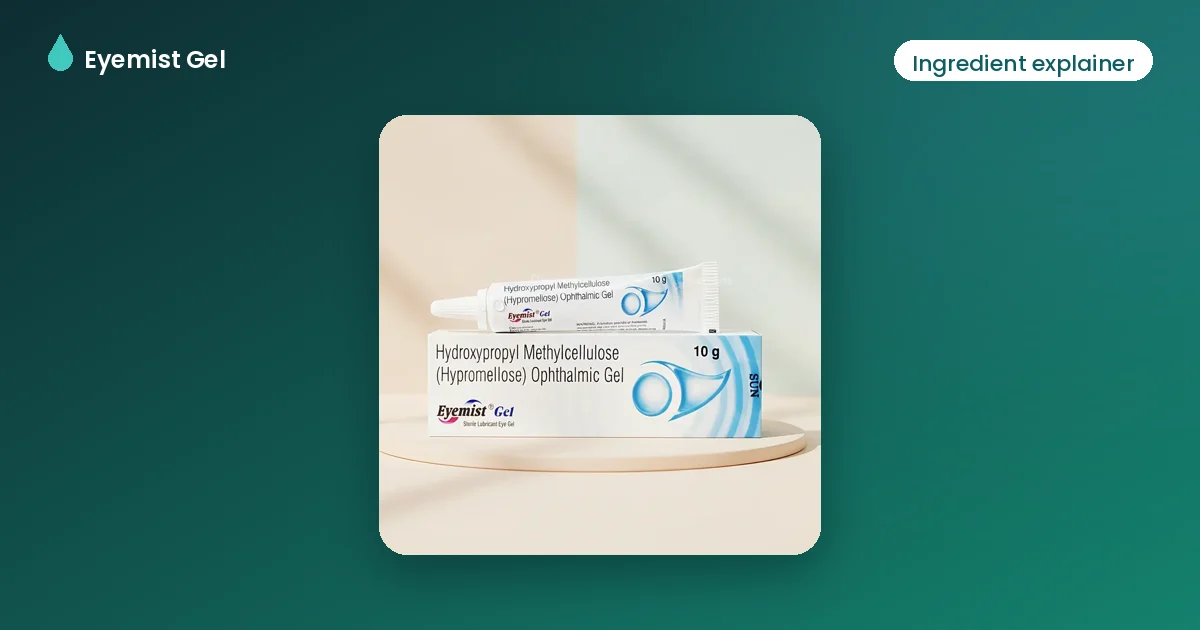
For the end-of-day category, Eyemist Gel is a sterile lubricant eye gel formulated with hypromellose 0.3% for the temporary relief of dryness of the eye. It’s a gel-format option worth comparing against other overnight lubricants on your shelf, using the same label checklist covered above: active ingredient, strength, and directions for use.
When Should Tired or Dry Eyes See a Doctor Instead of a Bottle?
An OTC lubricant is for temporary relief of dryness-related discomfort — it isn’t a treatment for an underlying eye disease. Stop using any lubricant and see an eye doctor if you have eye pain, a change in vision, redness or irritation that continues, or symptoms that worsen or last more than 72 hours. Anyone recovering from eye surgery, dealing with an eye injury or infection, caring for a child, or already using prescription eye drops should check with an eye-care professional before adding any OTC lubricant.
Basic hygiene matters too: don’t let the tip of a bottle or tube touch your eye, eyelid, or any surface, replace the cap after use, and discard any product that has changed color or turned cloudy.
Eyemist Gel is an independent product and is not manufactured by, affiliated with, sponsored by, or endorsed by Alcon Inc. GenTeal® is a registered trademark of Alcon Inc. References are for identification and comparison only; products may differ in inactive ingredients, formulation and performance.
Ready to Try a Lubricant Gel for the End of Your Day?
If your evenings end with gritty, heavy-feeling eyes after a long day of screens or driving, a thicker overnight lubricant may fit better than a daytime drop. Compare the label on Eyemist Gel, a sterile hypromellose 0.3% lubricant eye gel, against what you currently use, and pick based on the active ingredient, strength, and directions — not marketing claims.
This article is for general information and is not medical advice. Always read and follow the product label, and talk to an eye doctor if your symptoms persist or worsen.
Related Articles

Frequently Asked Questions
Honest answers about Eyemist Gel — ingredients, how to use it, shipping, and returns.
There’s no single best product for everyone, but a lubricant drop or gel that supplements the tear film is the usual starting point, since reduced blinking during screen work speeds up tear evaporation. For daytime use, a low-viscosity drop keeps vision clear immediately; for end-of-day dryness, a thicker gel can offer longer comfort overnight. Check the Drug Facts label for the active ingredient and strength, and follow its directions rather than a personal schedule.
Yes. Eye strain from focusing at a fixed distance, uncorrected vision problems, poor lighting, and lack of sleep can all cause tired-feeling eyes without true dryness. Lubricant drops help when the surface of the eye is dry, but if symptoms persist after rest, adequate sleep, and a lubricant, an eye doctor can check for an underlying cause such as a refractive error.
The allowed frequency is printed on each product’s own Drug Facts label and varies by formula, so always follow the specific directions on the bottle you’re using. As a general guide, if you’re reapplying more than a few times a day, a preservative-free option is usually better tolerated than a preserved multi-dose bottle used at the same frequency.
A gel is generally the better fit for nighttime, because its thicker consistency stays on the eye longer than a thin drop, which matters most during the hours you aren’t blinking at all. The trade-off is a brief period of blurred vision right after application, which is why gels aren’t usually recommended before driving or close detail work.
Not necessarily. If you only use lubricant drops once or twice a day, a preserved multi-dose bottle is generally fine for most adults. Preservative-free formulas become more important as frequency increases, since repeated exposure to preservatives can irritate the eye’s surface over time in people who need drops many times a day.
Comments (0)
No comments yet. Be the first!