
Humidifier for Dry Eyes: Does It Help and How to Use One

A humidifier for dry eyes can genuinely help by raising indoor moisture so tears evaporate more slowly off the eye's surface. It will not fix an underlying tear-production problem, but for eyes dried out by heating, air conditioning, or long screen sessions, steady humidity between roughly 40% and 60% takes real pressure off your tear film.
Key takeaways
- Indoor air below about 30% relative humidity speeds up tear evaporation and can worsen dry eye symptoms.
- A target range of 40–60% relative humidity is commonly cited for comfortable indoor air, including for sleep.
- Cool mist and warm mist humidifiers raise humidity equally well; the choice comes down to safety, noise, and personal comfort.
- Placement a few feet from your bed, out of direct airflow toward your face, works better than aiming it straight at you.
- A humidifier is an environmental fix, not a substitute for a lubricant eye drop or gel when your eyes are already irritated.
Does Adding Humidity to a Room Really Reduce Dry Eye Symptoms?
The evidence here is modest but real. A small randomized trial on desktop humidifier use in frequent computer users, described by Medical News Today (2024), found some participants reported a modest improvement in eye dryness — though the study was small and humidity alone did not resolve symptoms for everyone.
That lines up with what we see when customers describe their routines: a humidifier tends to make screen-heavy days more tolerable, not symptom-free. Dry eye has several possible causes — aging, certain medications, contact lens wear, and underlying tear-film imbalance among them — so an air-moisture fix addresses only the environmental piece of that picture.
Think of it as lowering the demand on your tears rather than increasing the supply. Less evaporation means your existing tear film has to work less hard between blinks, which is a reasonable goal for anyone in a heated or air-conditioned space for hours at a stretch.
What Humidity Range Should You Aim For in a Bedroom?
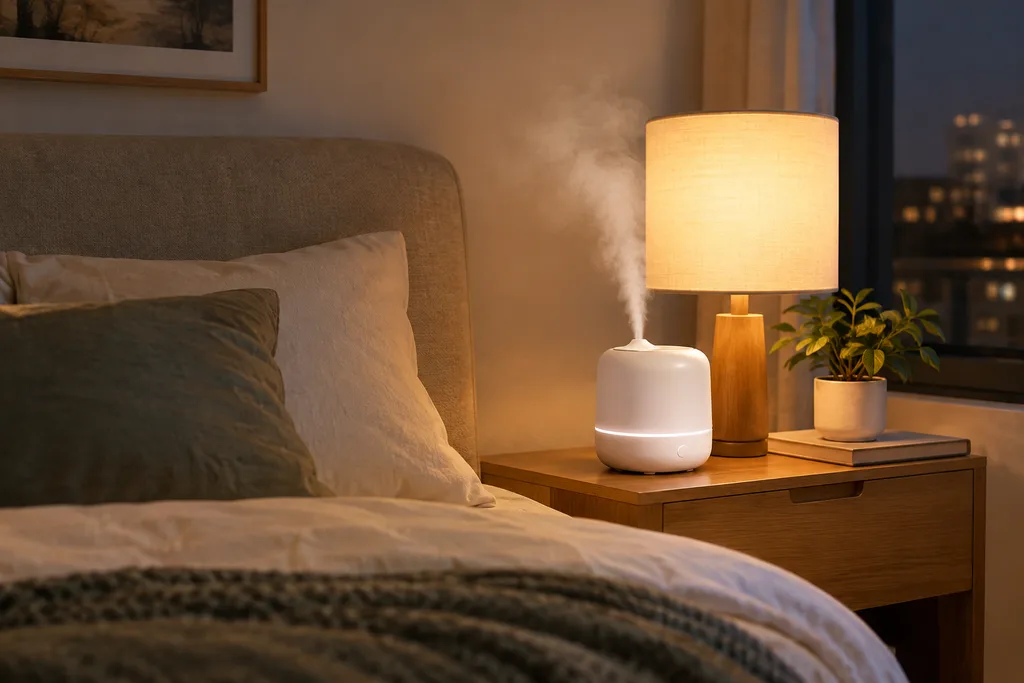
Most guidance points to a target of roughly 40% to 60% relative humidity for comfortable, healthy indoor air. A 2018 study on sleep environments, cited by Medical News Today (2024) and originally published in Building and Environment (2018), suggests this range supports better sleep quality overall, not just eye comfort.
Below about 30%, air starts to feel noticeably dry: skin tightens, sinuses feel parched, and tear film evaporates faster than usual. Above roughly 60%, you run into a different problem — condensation, musty odors, and conditions that favor mold and dust mites.
A cheap hygrometer (a small humidity gauge, often sold alongside humidifiers) takes the guesswork out of this. Set your humidifier, check the reading after an hour, and adjust rather than assuming the device is doing its job correctly.
How Do You Know If Your Bedroom Air Is Too Dry?
Waking up with eyes that feel gritty, a dry throat, or static-prone hair are common signs your bedroom air sits below a comfortable range. Houseplants wilting faster than expected, or wood furniture cracking, point the same direction. If you have a heating system running overnight in colder months, that alone often pulls indoor humidity well under 30% without you noticing until your eyes tell you.
Cool Mist or Warm Mist: Which One Is Better for Dry Eyes?
Both cool mist and warm mist (steam) humidifiers raise room humidity equally well — the eye-comfort benefit comes from the moisture in the air, not the temperature of the mist. The real differences are safety, upkeep, and how each one feels in the room.
| Feature | Cool mist | Warm mist |
|---|---|---|
| Burn risk | None — safer around kids and pets | Heating element can scald if tipped |
| Mineral buildup | Can leave white dust with tap water | Boiling reduces some mineral residue |
| Noise | Fan-based models can hum | Usually quieter, no fan |
| Running cost | Lower — no heating element | Slightly higher electricity use |
| Best for | Shared bedrooms, households with children | Cold rooms, people who like warm air |
Neither option is inherently better for dry eyes specifically. If sinus congestion is part of your discomfort, some people prefer warm mist for the sensation alone, but there is no ophthalmic requirement for heat.
Can a Humidifier Replace Eye Drops or a Lubricant Gel?
No. A humidifier changes the air around your eyes; it does not add lubrication directly to the eye's surface. If your eyes already feel gritty, burning, or irritated from dryness, a demulcent (a lubricating ingredient that coats and protects the eye's surface) eye gel works on contact, while the humidifier works over hours in the background.
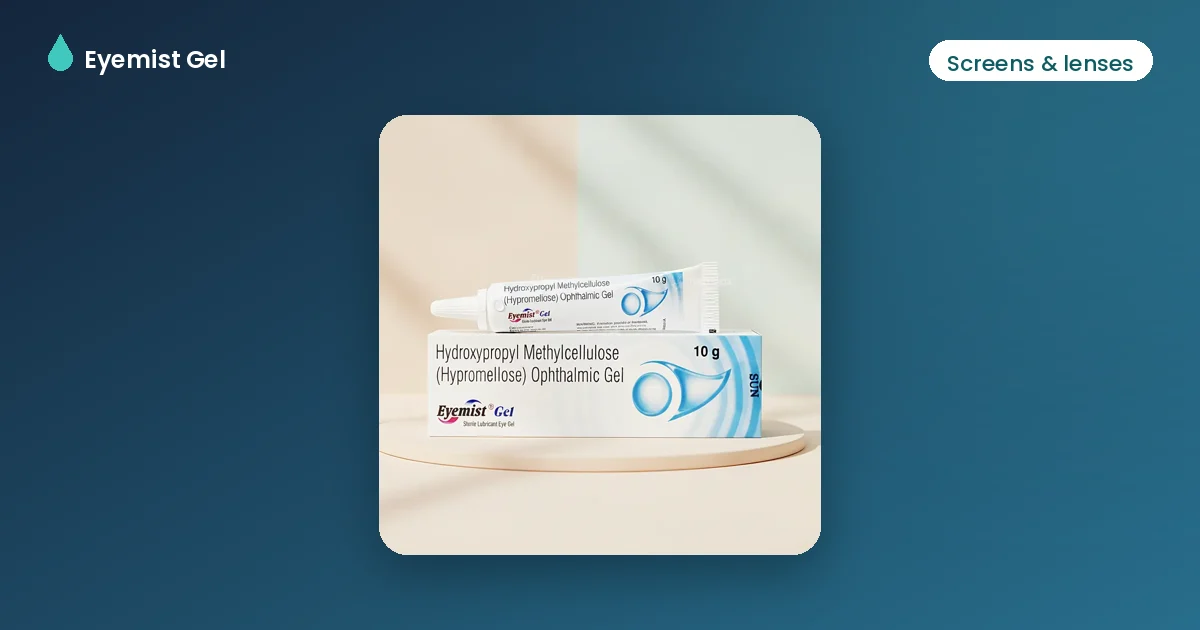
Many people use both: a gel like Eyemist Gel, a sterile hypromellose 0.3% lubricant eye gel, for the temporary relief of burning and irritation due to dryness, alongside a humidifier running overnight to keep the air from undoing that relief by morning. Always follow the directions printed on the product's label.
Where Should You Place a Humidifier for the Most Eye Comfort?
Position matters more than most people expect. Set the unit a few feet from your bed or desk, at roughly head height, rather than right beside your face — a direct stream of mist across open eyes can feel irritating rather than soothing.
Avoid corners with poor airflow, since that is where condensation and mold tend to form on nearby walls. A central spot in the bedroom, away from electronics and on a flat, stable surface, lets moisture spread evenly through the room.
For an office desk, a small personal unit angled slightly away from your face, rather than straight at it, does a better job of raising ambient humidity without drying mist landing directly on the eye's surface.

How Do You Clean a Humidifier So It Doesn't Grow Mold?
Standing water inside a humidifier tank is an easy place for bacteria and mold to grow, and running a dirty unit can push those particles straight into the air you breathe near your eyes. Empty and dry the tank daily if possible, and use distilled or demineralized water instead of tap water to cut down on mineral scale and the organisms that feed on it.
A deeper clean once a week — a diluted white vinegar rinse followed by a thorough water rinse, per most manufacturer manuals — keeps the tank from developing a biofilm you can't easily see. Let every part air-dry fully before refilling; sealing in residual moisture is exactly how buildup starts.
How Often Should You Replace the Filter or Wick?
Check your specific model's manual, since schedules vary by design, but a wick or filter that looks discolored, feels slimy, or has a musty smell is overdue regardless of the calendar. A humidifier that is supposed to help your eyes shouldn't be the thing introducing allergens or mold spores into your bedroom air.
Room Humidifier or Personal Eye Steamer: How Do You Choose?
A room humidifier raises moisture across a whole space and runs unattended for hours, which suits overnight use or an all-day office setup. A personal eye steamer delivers a short, close-range mist aimed only at the eyes, which some people find gives faster, localized relief during a midday break.
If your dryness shows up mainly at night or after hours at a desk in the same room, a room unit addressing the whole environment is the more practical fix. If you travel often, work in varied spaces, or want targeted relief in a few minutes, a compact personal device may fit better — just know it won't change the humidity of the room itself.
Either way, pair the device with a lubricant drop or gel for moments when your eyes already feel irritated; the humidifier works ahead of time, the lubricant works in the moment.
When Should You See an Eye Doctor Instead of Just Adding Moisture?
A humidifier and an over-the-counter lubricant address dryness symptoms, not underlying eye disease. Stop relying on self-care and see an eye doctor if you have eye pain, any change in vision, redness or irritation that does not improve, or symptoms that get worse or last more than 72 hours.
Anyone recovering from eye surgery, dealing with an eye injury or infection, caring for a child's eyes, or already using a prescription eye drop should check with an eye-care professional before adding a humidifier-and-lubricant routine on top of existing treatment. The American Academy of Ophthalmology notes that persistent dry eye can have several underlying causes worth a proper exam.
Keeping Eyes Comfortable Between Humidifier Sessions
The question our customers ask most often isn't which humidifier to buy — it's what to do in the hours a humidifier can't reach, like a long commute or a dry office with no outlet nearby. That's where a lubricant gel earns its place in the same routine.
Eyemist Gel is a sterile, hypromellose 0.3% lubricant eye gel for the temporary relief of burning and irritation due to dryness of the eye, and for protection against further irritation. Follow the directions on the label, and avoid letting the tube tip touch your eye or any surface to keep the gel sterile.
This article is for general information and is not medical advice. Always read and follow the product label, and talk to an eye doctor if your symptoms persist or worsen.
Related Articles



Frequently Asked Questions
Honest answers about Eyemist Gel — ingredients, how to use it, shipping, and returns.
It can help, within limits. Raising indoor humidity toward roughly 40–60% slows tear evaporation, which eases dryness for many people exposed to heating, air conditioning, or heavy screen time. A small randomized trial on desktop humidifier use found a modest improvement in some computer users, but not a full resolution of symptoms. A humidifier works on the environment around your eyes, not on the tear film itself, so pairing it with a lubricant drop or gel covers the gap it can't reach.
A range of about 40% to 60% relative humidity is commonly cited for comfortable indoor air, including sleep quality, based on a 2018 study on indoor environments. Below roughly 30%, air feels noticeably dry and tear evaporation speeds up. Above about 60%, condensation and mold risk increase. A small hygrometer placed near your bed lets you confirm your humidifier is actually keeping the room in that window rather than guessing.
Both raise room humidity equally; the difference is in safety and upkeep, not eye benefit. Cool mist units carry no burn risk and suit households with children or pets. Warm mist units run quieter and some people find the warmth more comfortable in cold rooms, but a tipped unit with hot water is a scald hazard. Neither style is medically required for dry eye relief, so personal comfort and safety around your household should decide it.
Set it a few feet from your bed or desk, roughly at head height, rather than pointed directly at your face — a close, direct mist stream can feel irritating instead of soothing. Keep it away from poorly ventilated corners where condensation and mold tend to collect, and place it on a flat, stable surface away from electronics. A central bedroom spot spreads moisture evenly through the room overnight.
Empty and dry the tank daily when possible, and use distilled water instead of tap water to reduce mineral buildup. Do a deeper weekly clean with a diluted white vinegar rinse followed by a full water rinse, then let every part air-dry completely before refilling. A humidifier left damp and unwashed can grow bacteria or mold and push those particles into the air near your eyes, undoing the comfort it's meant to provide.
Comments (0)
No comments yet. Be the first!