
Preservative-Free Eye Drops: When They Matter, How to Choose
Preservative-free eye drops are lubricant eye drops packaged without an added antimicrobial agent such as benzalkonium chloride (BAK), usually in single-use vials or in multi-dose bottles built with a special valve. They matter most if you use drops more than a few times a day, wear contact lenses, or notice your eyes sting more with regular drops over time. The right choice depends on how often you dose and how you like to carry your bottle.
Key takeaways
- Preservative-free drops skip BAK and similar additives, which lowers the chance of irritation with frequent, long-term use.
- Single-use vials are meant for one application and then discarded; multi-dose preservative-free bottles use a filtered valve to stay usable for longer.
- Contact lens wearers and anyone dosing more than four times a day are the clearest candidates for preservative-free formulas.
- A thicker gel tends to sit on the eye longer than a thin drop but can blur vision briefly after application.
- Eye pain, vision changes, or symptoms lasting beyond 72 hours mean it is time to stop self-treating and call an eye doctor.
What Does "Preservative-Free" Actually Mean on an Eye Drop Label?
On a Drug Facts label, "preservative-free" means the manufacturer left out the antimicrobial ingredient that standard multi-dose bottles need to stay sterile after the cap comes off and on repeatedly. The most common of those preservatives is benzalkonium chloride, usually shortened to BAK. Most preservative-free lubricants still list the same active ingredient family as standard drops — often a demulcent like hypromellose, also called HPMC, which coats the eye's surface and slows tear evaporation.
The term only describes what is missing, not how well a drop works. A preservative-free vial and a preserved bottle can share the same active ingredient at the same strength; the difference is packaging and what happens to the solution once it is exposed to air and your fingers.
Why Can Preservatives Like BAK Irritate Eyes With Frequent Use?
A preservative's job is to stop bacteria from growing inside a bottle that gets opened dozens of times. That same chemical action can wear on the eye's surface when a person uses drops many times a day, every day, for months. According to Dr. Barbara Horn, past president of the American Optometric Association, the FDA requires multidose ophthalmic solutions to be preserved against contamination, but “with chronic use... these preservatives may cause adverse effects, including reduction of the desired effect, allergic response, and toxic reaction.”
In plain terms: the more often you dose, the more that preservative touches the same surface cells, and the higher the odds it starts working against you instead of for you. That is the core reason preservative-free options exist — not because preservatives are unsafe at normal use, but because frequency changes the math.

Single-Use Vials or Multi-Dose Preservative-Free Bottles — Which Should You Pick?
Both formats remove the preservative, but they solve the contamination problem in different ways. A single-use vial is sealed sterile and meant to be opened, used once, and thrown away. A multi-dose preservative-free bottle instead relies on a one-way filter or valve at the tip that is designed to keep air and bacteria from flowing back into the solution between squeezes.
| Format | Best for | Trade-off |
|---|---|---|
| Single-use vials | Travel, sensitive or post-surgical eyes, sharing-free dosing | More packaging waste; vials can be fiddly to open and reseal is not possible |
| Multi-dose PF bottle with valve | Daily use at home or a desk, fewer things to carry | Relies on the valve working correctly; some people find the bottle stiffer to squeeze |
| Standard preserved bottle | Occasional, low-frequency dryness | Not ideal if used more than a few times daily |
How Long Does an Opened Preservative-Free Vial Stay Safe to Use?
A single-use vial is built around one idea: open it, use it, discard it. Once air has touched the solution, there is nothing left inside to stop bacteria from growing, so reusing a vial for a second dose later in the day defeats its purpose. Multi-dose preservative-free bottles are different — their valve is engineered to let them be used for a limited window after opening, and that window is printed on the individual product's label, so check it rather than assume one product's timeline applies to another.
Who Actually Benefits From Preservative-Free Eye Drops?
Not everyone with occasional dry eyes needs to switch. Preservative-free formulas tend to make the biggest difference for people who dose often, have reactive or sensitive eyes, or fall into a few specific groups listed below.
- Anyone using lubricant drops more than about four times a day, where repeated preservative exposure adds up.
- People who notice stinging, redness, or a gritty feeling that gets worse the longer they use a standard drop.
- Contact lens wearers who want to rewet eyes without preservatives interacting with the lens material.
- People recovering from eye surgery or with a diagnosed ocular surface condition, under an eye doctor's direction.
- Children, since smaller eyes are dosed with the same preservative concentration as adults get.
Do Contact Lens Wearers Need Preservative-Free Drops?
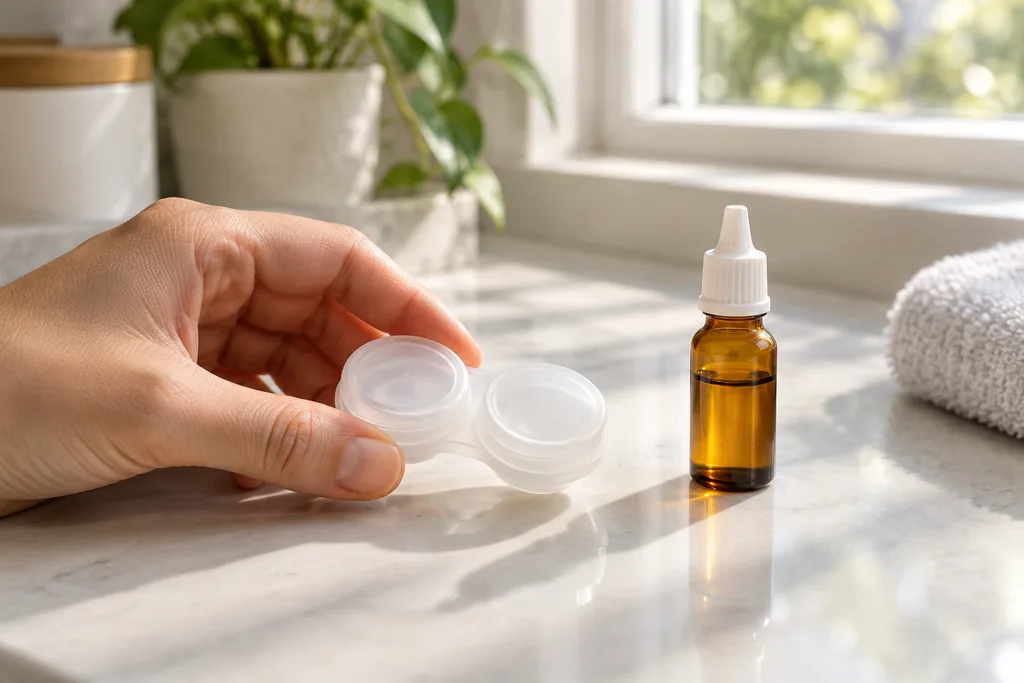
Soft contact lenses are porous, and BAK can bind to that lens material and build up in a way it would not on the bare eye. That is why many lens-focused rewetting drops are formulated without it. If you wear lenses and reach for drops during the day, check the label for a specific statement about contact lens compatibility rather than assuming any lubricant is safe to use over a lens.
What Should You Check on the Label Before Buying?
Every OTC lubricant sold in the United States carries a Drug Facts label, and reading it the same way each time is the fastest way to compare products. When we compare two labels side by side, the first line we check is the active ingredient and its percentage, since that tells you what the drop is actually doing before anything else.
- Active ingredient and strength — for example hypromellose 0.3%, listed near the top of the label.
- Preservative-free statement — look for the words printed directly on the box, not just implied by "gentle" marketing language.
- Format — single-use vial versus multi-dose bottle, which decides how you will store and discard it.
- Contact lens directions — whether the label says it can be used with lenses in place.
- Discard timeframe — how long an opened multi-dose bottle stays usable, per that specific product.
- Warnings — when to stop use and ask a doctor.
Gel or Drops — Does It Matter for Preservative-Free Formulas?
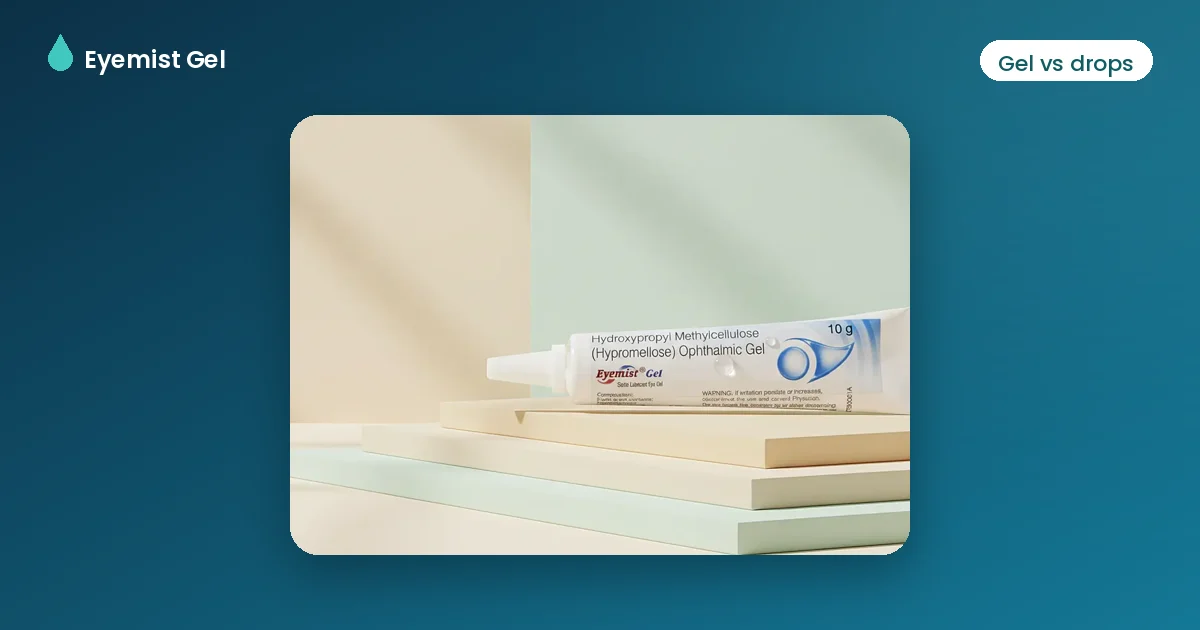
A gel and a drop can share the same active ingredient but behave differently once they are on the eye. A thicker gel formula generally stays on the eye's surface longer than a thin drop, which is why many people reach for a gel at night rather than during the day. That same thickness is also why a gel can blur vision for a short period right after application — a normal, temporary effect, not a sign something went wrong.
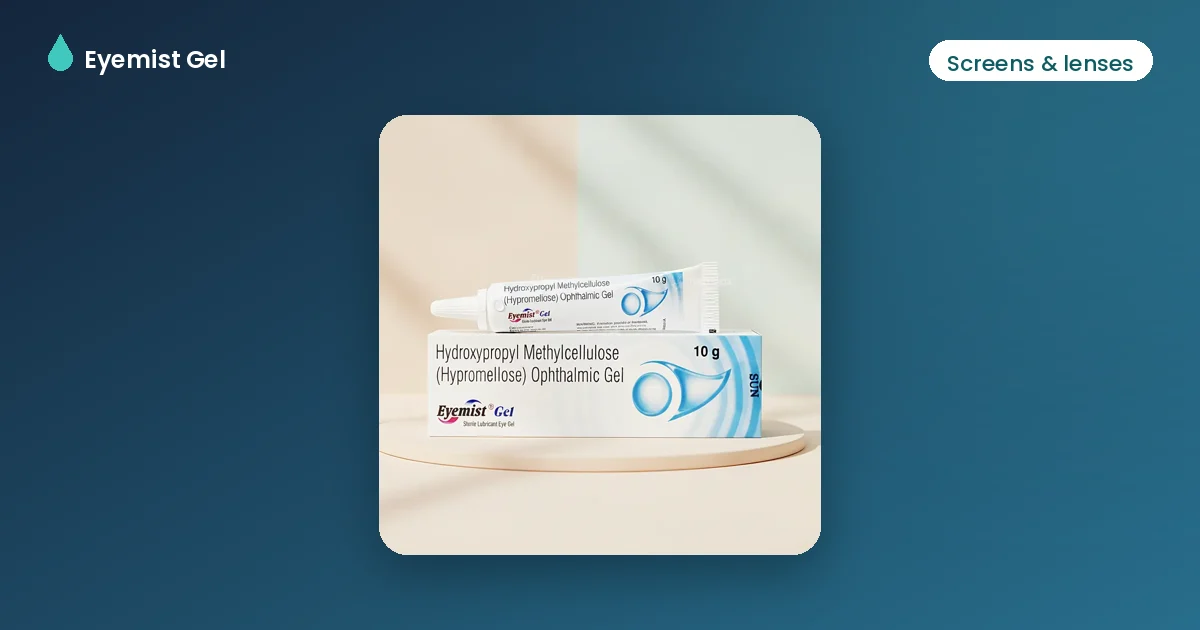
Eyemist Gel is a sterile lubricant eye gel with hypromellose 0.3% for the temporary relief of dryness, packaged in a 10 g tube. As with any gel, follow the directions printed on its own label, including how often it can be applied and whether it is meant for daytime or nighttime use.
When Should You See an Eye Doctor Instead of Reaching for Another Bottle?
An over-the-counter lubricant, preservative-free or not, relieves the symptoms of dryness for a while — it does not treat an underlying eye disease and it is not a substitute for a professional exam. Stop using any lubricant and see an eye doctor if you notice eye pain, any change in vision, continued redness or irritation, or symptoms that get worse or last more than 72 hours.
Anyone recovering from eye surgery, dealing with an eye injury or infection, caring for a child's eyes, or already using a prescription eye drop should ask an eye-care professional before adding an OTC lubricant to the routine. For general background on dry eye causes and when treatment should move beyond drops, MedlinePlus and the American Academy of Ophthalmology are reliable starting points.

Which Preservative-Free Option Fits Your Routine?
If your dryness shows up mainly at night or after long screen sessions and you want a formula that stays put, a preservative-free lubricant gel like Eyemist Gel is built for that kind of sustained relief rather than quick rewetting between meetings. Pick a single-use vial for travel or occasional sensitive-eye days, and a multi-dose preservative-free bottle or gel for a steady daily habit at home.
This article is for general information and is not medical advice. Always read and follow the product label, and talk to an eye doctor if your symptoms persist or worsen.
Related Articles
Frequently Asked Questions
Honest answers about Eyemist Gel — ingredients, how to use it, shipping, and returns.
Regular, multi-dose eye drops contain an antimicrobial preservative, often benzalkonium chloride (BAK), that keeps the bottle sterile after repeated opening. Preservative-free drops leave that ingredient out and instead come in single-use vials or in multi-dose bottles built with a filtered valve. The active lubricating ingredient can be identical in both; the difference is in the packaging and how the eye reacts to frequent, long-term use.
Neither is universally better; it depends on how often you use drops. For occasional use, a standard preserved bottle works fine for most people. For frequent use, several times a day over weeks or months, preservative-free formulas reduce repeated exposure to the preservative, which can otherwise cause irritation with chronic use according to the American Optometric Association.
No. A single-use vial is sealed sterile for one application. Once it is opened and exposed to air, there is nothing inside to stop bacterial growth, so using it again later is not recommended. Multi-dose preservative-free bottles are different — they are designed with a valve for repeated use within a window stated on that product's own label.
Many preservative-free formulas are made for use with contact lenses, since preservatives like BAK can bind to soft lens material and build up over time. Even so, check the specific product's label for a statement about contact lens use before applying a drop with lenses in place, since not every lubricant is formulated the same way.
Consider preservative-free drops if you use lubricants more than a few times a day, wear contact lenses, notice irritation that worsens with a standard drop, or have recently had eye surgery. If dryness continues despite switching formulas, or if you notice pain or vision changes, see an eye doctor rather than cycling through more OTC products.
Comments (0)
No comments yet. Be the first!