
OTC Eye Drops for Dry Eyes: How to Read the Drug Facts Label

OTC eye drops for dry eyes are regulated as over-the-counter drugs, which means every bottle carries a standardized Drug Facts label listing the active ingredient, its strength, approved uses, warnings and directions. Reading that panel — not the front-of-box marketing — is the fastest way to compare two products and pick one that matches your symptoms.
Key takeaways
- The Drug Facts label on US OTC eye drops always lists active ingredient, purpose, uses, warnings, directions and inactive ingredients in that fixed order.
- The active ingredient line tells you the lubricant type and its percentage strength — the number you should compare between brands.
- Inactive ingredients include preservatives, which matter most if you use drops more than a few times a day.
- Directions on the label are the only dosing instructions you should follow; there is no faster-relief shortcut.
- Eye pain, vision changes or symptoms lasting beyond 72 hours mean it's time to stop and see an eye doctor.
What Information Must Appear on an OTC Eye Drops Drug Facts Label?
Every OTC ophthalmic product sold in the United States follows an FDA monograph format, so the panel always runs in the same order: active ingredient, purpose, uses, warnings, directions, other information and inactive ingredients. The FDA's Drug Facts label guidance explains this layout was designed so shoppers could compare any two OTC products the same way, whether it's a pain reliever or a lubricant eye gel.
That consistency matters here because dry eye products range from thin saline-style drops to thick gels, and the label is the one place where format never changes even when the formula does. Once you know where to look, comparing two boxes on a drugstore shelf takes under a minute.
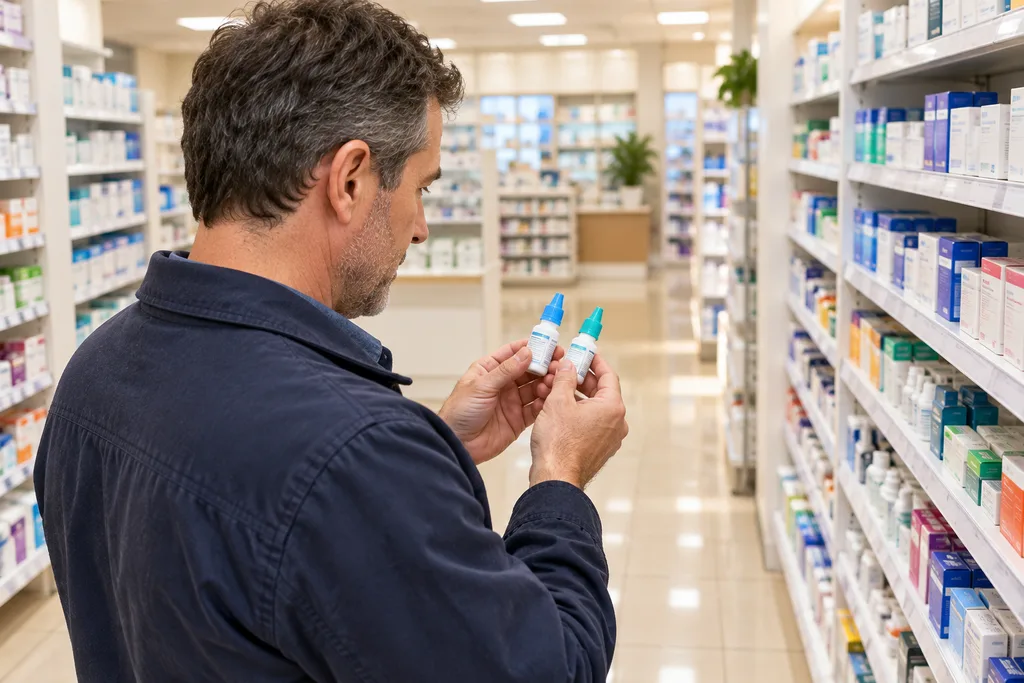
What Does the Active Ingredient Line Tell You About Strength?
The active ingredient line names the demulcent — a lubricating substance — and its concentration as a percentage. Common choices include hypromellose (also called HPMC), carboxymethylcellulose, polyethylene glycol, glycerin and hyaluronic acid, each listed with a number such as 0.3% or 0.5%.
That percentage is the one figure worth comparing side by side. A higher percentage of the same ingredient generally feels thicker and can sit on the eye longer, though comfort still depends on the rest of the formula and on your own tear film. Two products with the same active ingredient at the same strength are closer in function than their packaging suggests, even if the brand names differ.
Why Do Hypromellose and Carboxymethylcellulose Numbers Differ?
Hypromellose and carboxymethylcellulose are both cellulose-derived demulcents, but they're not interchangeable milligram for milligram — a 0.3% hypromellose gel and a 0.5% carboxymethylcellulose drop can feel quite different because the molecules thicken fluid at different rates. This is why the label compares products within the same ingredient family more reliably than across families.
If a label looks unfamiliar, the official listing on DailyMed, the National Library of Medicine's drug label database, shows the exact wording a manufacturer filed with the FDA for that specific product.
How Do Uses and Warnings Sections Help You Compare Products?
The uses section is short by law: it states only what the active ingredient is approved to do, typically “for the temporary relief of burning and irritation due to dryness of the eye” or similar wording. That phrasing is deliberately narrow — an OTC lubricant is not approved to treat an underlying eye disease, only to ease the symptom.
The warnings section is where products genuinely diverge. It covers when not to use the product, contact lens instructions, and signs that mean you should stop. Reading this section before buying tells you more about whether a product fits your situation than any front-label claim.
Which Warnings Mean You Should Stop Use and Call a Doctor?
Nearly every OTC lubricant label carries a version of the same caution: stop use and ask a doctor if you experience eye pain, changes in vision, continued redness or irritation, or if the problem worsens or lasts more than 72 hours. These warnings are standardized across the category, so you'll see nearly identical language whether you're reading a bottle of drops or a tube of gel.
The label also usually tells you not to use the product if the solution changes color or becomes cloudy, and not to touch the tip to your eye or any other surface to avoid contamination.
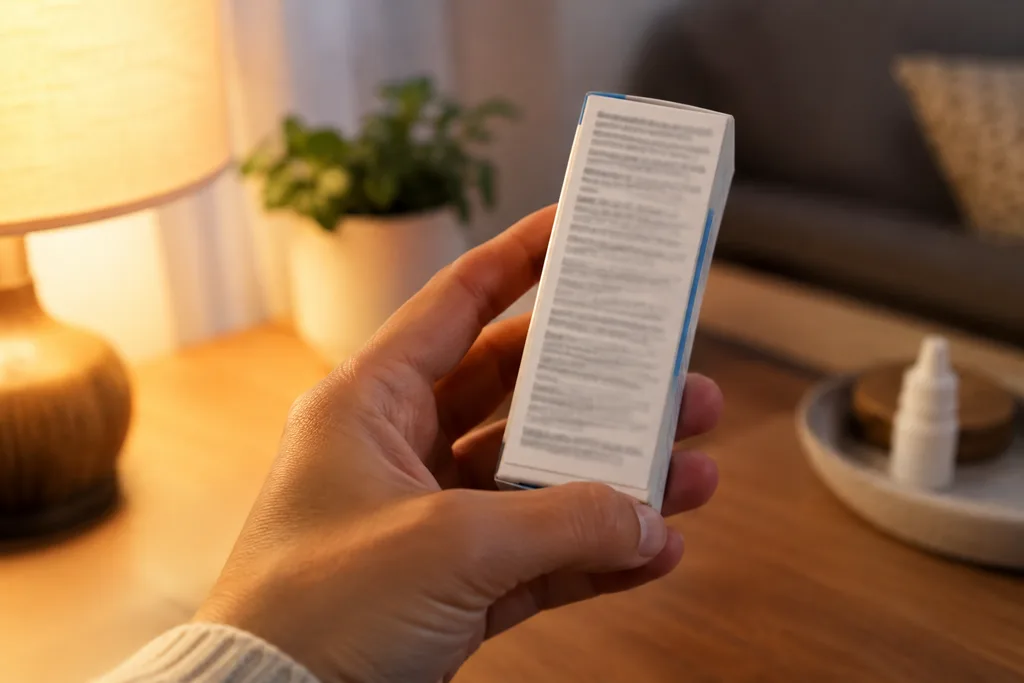
What Do Directions and Inactive Ingredients Change About How You Use a Product?
The directions section states exactly how many drops to use and how often, and that's the only dosing guidance you should follow — not a personal routine, and never “use more for faster relief.” Some gels direct once-a-day or nighttime use because they're thicker and meant to sit on the eye longer; thinner drops may be labeled for use as needed throughout the day.
Inactive ingredients are listed last and include water, buffering agents, and — in multi-dose bottles — a preservative. This line is where you'll spot whether a bottle is preservative-free or contains a preservative like benzalkonium chloride.
Does a Preservative Listed in Inactive Ingredients Matter?
It can, mainly if you expect to use the product often. The American Academy of Ophthalmology notes that people using lubricant drops more than four times a day may do better with preservative-free formulas, since repeated exposure to some preservatives can add irritation on top of existing dryness. Single-use vials are preservative-free by design; multi-dose bottles rely on a preservative to stay sterile once opened, so check that inactive ingredients line if frequent use is part of your routine.
How Should You Compare Two Drug Facts Labels Side by Side?
Line up the same five fields for each product you're considering: active ingredient and strength, form (drop or gel), preservative status, directions, and any contact-lens instruction. This turns a shelf decision into a short checklist instead of a guess based on packaging.
| Label field | What to look for | Why it matters |
|---|---|---|
| Active ingredient & % | Same ingredient, compare strength | Higher % often means thicker, longer-lasting lubrication |
| Form | Drop vs. gel vs. ointment | Gels and ointments sit longer but can blur vision briefly |
| Inactive ingredients | Preservative named or absent | Frequent users may prefer preservative-free |
| Directions | Frequency and dose allowed | Sets how it fits daytime vs. nighttime use |
| Contact lens note | Remove lenses, or safe with lenses | Avoids applying the wrong product while lenses are in |
When we compare two Drug Facts labels at the shop, the first line we check is the active ingredient and strength — it tells you more about how a product will feel than the brand name ever does.
When Should You See an Eye Doctor Instead of Reaching for Another Bottle?
An OTC lubricant only relieves the symptom of dryness for a while — it doesn't address what's causing your eyes to feel dry in the first place. If you have eye pain, sudden vision changes, discharge, or redness and irritation that continue or worsen despite using a lubricant as directed, stop use and call an eye doctor rather than trying a different drop.
The same applies if symptoms last more than 72 hours, if you've recently had eye surgery or an eye injury, if you suspect an infection, if you're treating a child's eyes, or if you already use a prescription eye drop — ask an eye-care professional before adding an OTC product. Persistent dryness can point to conditions such as meibomian gland dysfunction or Sjögren's, which MedlinePlus notes need a clinical diagnosis, not just more lubricant.
Where Does a Hypromellose Gel Fit Once You've Read the Label?
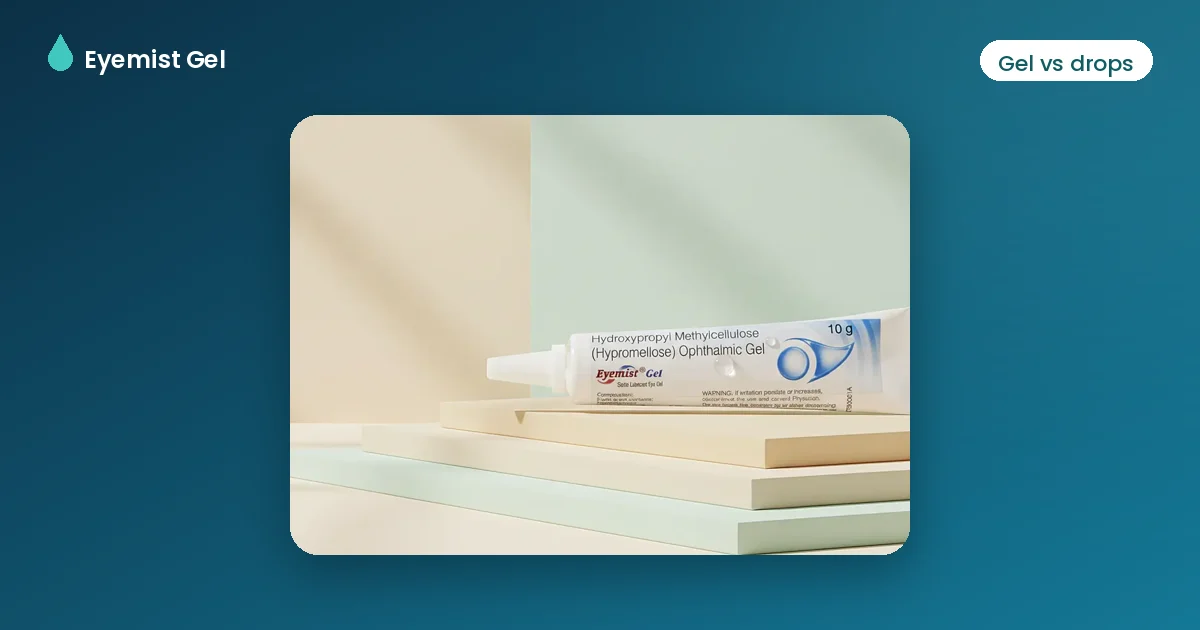
Once you've checked active ingredient, strength, preservative status and directions, picking between a thin drop and a thicker gel comes down to when and how often you plan to use it. A gel built on hypromellose is generally positioned for longer-lasting comfort between applications, which is why many people reach for one before bed or during long stretches without easy reapplication.
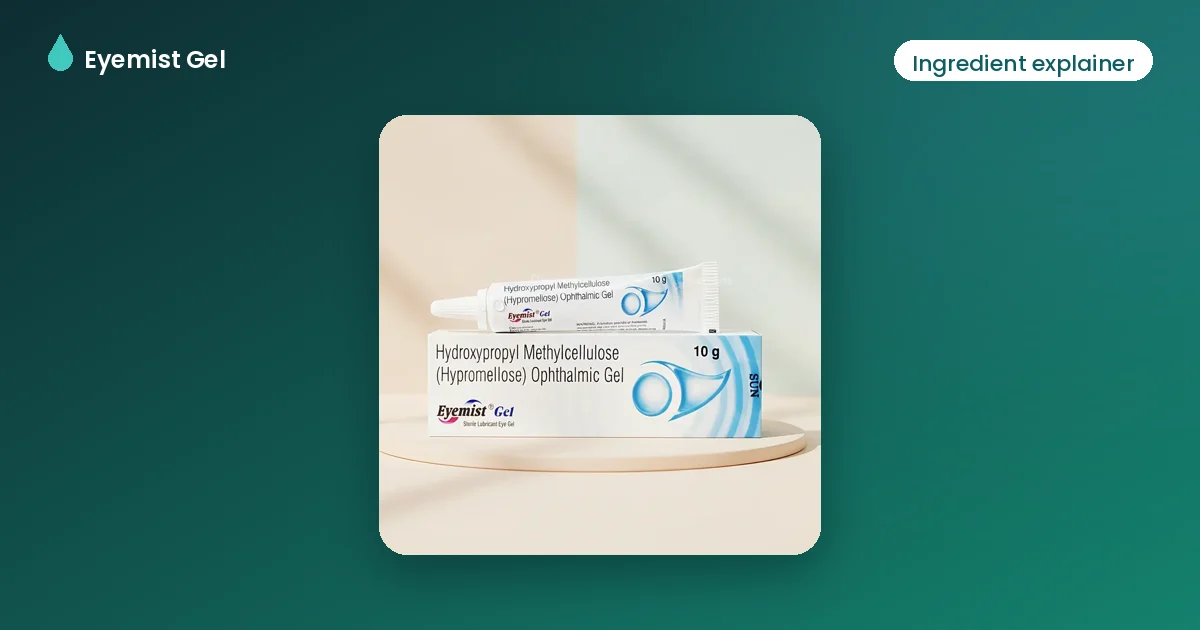
Eyemist Gel's own label follows this same Drug Facts format, with hypromellose 0.3% as the active ingredient and the same category-standard “temporary relief of dryness” wording described above. If you want a sterile lubricant eye gel that fits into this label-reading approach, start by comparing its active ingredient and directions against whatever you're using now.
Eyemist Gel is an independent product and is not manufactured by, affiliated with, sponsored by, or endorsed by Alcon Inc. GenTeal® is a registered trademark of Alcon Inc. References are for identification and comparison only; products may differ in inactive ingredients, formulation and performance.
This article is for general information and is not medical advice. Always read and follow the product label, and talk to an eye doctor if your symptoms persist or worsen.
Related Articles
Frequently Asked Questions
Honest answers about Eyemist Gel — ingredients, how to use it, shipping, and returns.
Both are lubricants, but gels generally use a higher concentration or a thicker-forming ingredient so they stay on the eye longer than a water-based drop. The Drug Facts label will show the active ingredient and its percentage so you can compare thickness between a drop and a gel. Gels can blur vision briefly after application, which is why many directions suggest using them before sleep rather than during activities that need sharp near vision right away.
Follow the frequency printed in the directions section of the specific product's label, since allowed use can differ between a thin drop meant for frequent reapplication and a thicker gel meant for once- or twice-daily use. There is no general rule that applies to every brand. If you find yourself needing drops far more often than the label allows, that's a sign to check in with an eye doctor rather than increase use on your own.
For people using lubricant drops only occasionally, a preserved multi-dose bottle is usually fine. For frequent use — several times a day — many eye doctors suggest preservative-free options because repeated exposure to some preservatives can add irritation on an already dry eye. The inactive ingredients line on the Drug Facts label will tell you whether a preservative is present.
It's the concentration of the lubricating ingredient — such as hypromellose or carboxymethylcellulose — in the solution, expressed as a percentage. Comparing this number between two products using the same ingredient gives a reasonable sense of relative thickness, though comfort also depends on other formula details. It does not indicate strength in the way a medication dose would for a disease-treating drug.
Check the directions and warnings sections on the specific label — some lubricants are labeled safe to use with contact lenses in place, while others direct you to remove lenses first. This varies by formula and by preservative type, so it isn't safe to assume one product's instructions apply to another.
Comments (0)
No comments yet. Be the first!