
How to Put in Eye Drops and Eye Gel: A Step-by-Step Guide
To put in eye drops, wash your hands first, then tilt your head back and pull your lower eyelid down to form a small pocket. Release one drop into that pocket without letting the bottle touch your eye, close your eyes gently, and wipe away any excess with a clean tissue. The technique for eye gel is almost identical, with a few extra steps for hygiene and timing that make a real difference once you add a second product or wear contact lenses.
Key takeaways
- Pull the lower eyelid into a small pocket and aim the drop there — never let the dropper tip touch the eye, lid or lashes.
- Wait at least a few minutes between two different eye products so the first one isn't rinsed away by the second.
- Gel sits longer on the eye than drops and can blur vision briefly, so many people save it for bedtime.
- Remove contact lenses before most drops or gels unless the label states they're safe over lenses.
- Stop use and call an eye doctor if you notice pain, vision changes, or redness that doesn't improve.
What Do You Need Before Putting In Eye Drops?
Before opening any bottle or tube, gather what you need and check a few things on the label. This takes under a minute but prevents the most common mistakes — contamination, missed doses, and using a product past its expiration.
- Soap and water, or hand sanitizer, to clean your hands.
- The eye drop or gel bottle, checked for cracks, cloudiness, or a changed color.
- A clean tissue or cloth to blot excess liquid.
- A mirror, if it helps you aim, though it isn't required.
- Contact lenses removed, unless the label specifically says the product is safe to use with lenses in.
Read the directions on the label every time, even for a product you've used before. The American Academy of Ophthalmology notes that using drops exactly as directed, and asking your doctor about timing when you take more than one kind, makes a measurable difference in how well they work (AAO, 2023).
What tools make eye drops easier to aim?
If you miss your eye often, a few low-tech tricks help more than they sound like they would. Lying flat on a bed or couch, rather than tilting your head back standing up, keeps your hand steadier because your arm has something to rest against. Some people find it easier to focus on a fixed point on the ceiling first, then bring the bottle into their peripheral vision rather than watching it approach.
How Do You Put Eye Drops Into Your Eye, Step by Step?
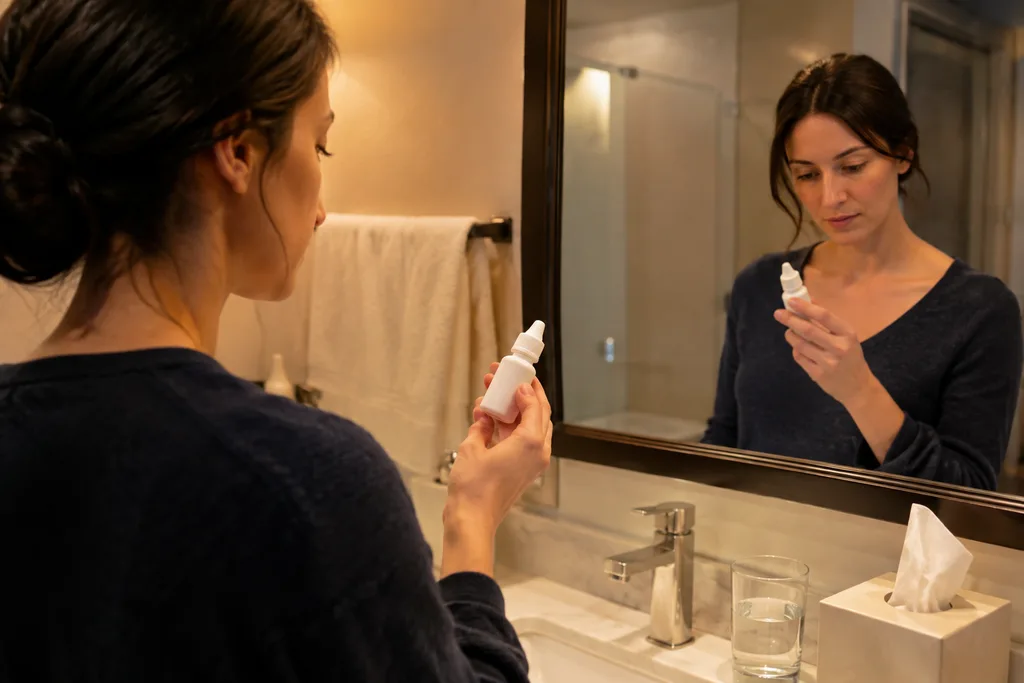
Here is the sequence that eye doctors and pharmacist guidance generally agree on for liquid drops. Each step covers one action, so you can follow it with a bottle in hand.
- Wash your hands with soap and water and dry them with a clean towel.
- Shake the bottle gently if the label tells you to.
- Tilt your head back, or lie down, and look at a spot on the ceiling.
- Pull your lower eyelid down with one finger to form a small pocket.
- Hold the bottle about an inch above your eye, tip down, without touching your eye, lid, or lashes.
- Squeeze gently to release one drop into the pocket, then close your eye.
- Press one finger lightly against the inner corner of your eye, near your nose, for about a minute. This keeps the drop from draining into your tear duct too quickly.
- Wipe away any extra liquid with a tissue and replace the cap without touching the tip.
Rubbing your eyes afterward pushes the drop out before it has time to spread across the tear film — the thin layer of fluid that keeps the eye's surface smooth and comfortable. Avoid it even if your eye feels itchy.
What if the drop misses your eye?
It happens, and it isn't a problem worth chasing with a second dose right away. If the drop clearly rolled down your cheek instead of landing in your eye, try again once, using the same bottle, rather than adding extra drops on top of one that may have partly landed. If you're not sure whether any of it made it in, check the label for guidance on what to do, or ask a pharmacist.
How Do You Apply Eye Gel Instead of Drops?
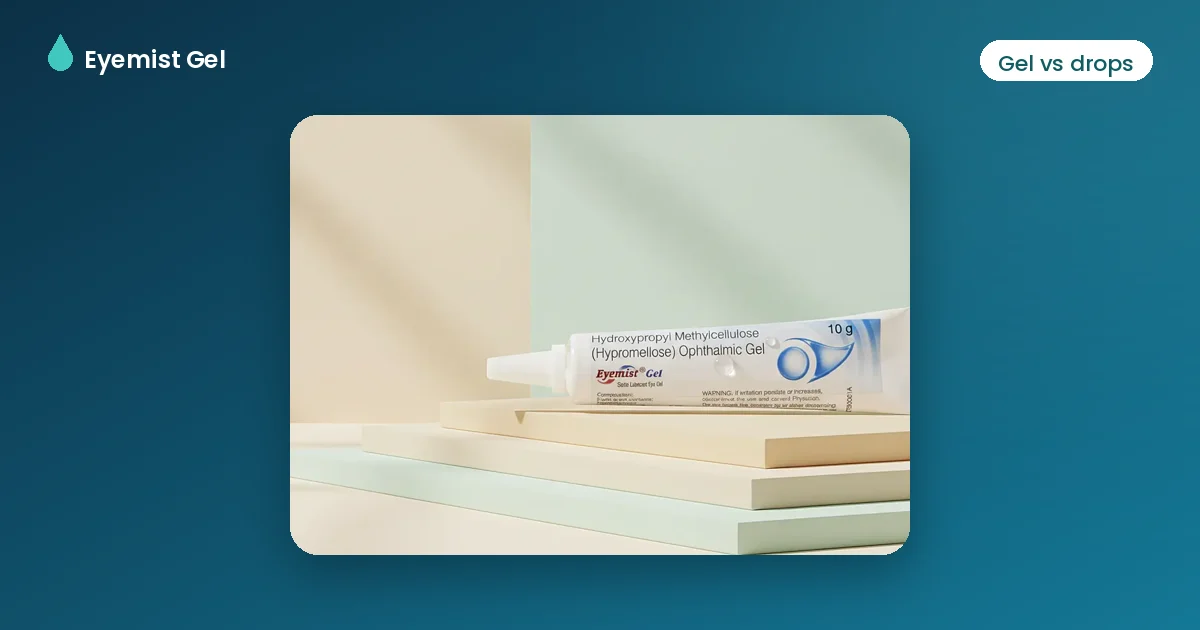
Lubricant eye gel goes in almost the same way as drops, but it comes out as a short ribbon rather than a round drop, and it sits on the eye longer. That thicker texture is part of the point: a gel formulated with an ingredient such as hypromellose — a demulcent that coats and holds moisture on the eye's surface — stays in place after a liquid drop would have already drained away.
- Wash your hands and check the tube for a clean, undamaged tip.
- Tilt your head back and pull your lower eyelid down to form a pocket, just as with drops.
- Gently squeeze a small ribbon of gel, about a quarter inch long unless the label says otherwise, into the pocket.
- Close your eye slowly and keep it closed for a moment so the gel can spread across the surface.
- Blink a few times if your vision feels smeared, then wipe away any excess at the lash line.
Because gel is thicker, it can blur your vision for a short while after you apply it. Many people prefer to use it right before bed for that reason, saving faster-drying liquid drops for daytime hours.

How Long Should You Wait Between Different Eye Drops?
If you use more than one eye product, timing matters more than most people assume. A second drop applied too soon can simply wash the first one off the eye's surface before it has had a chance to work, wasting both doses rather than adding to the effect.
| Situation | What to do | Why |
|---|---|---|
| Same drop, second application | Wait as directed on the label, often several minutes | Gives the first drop time to spread and settle |
| Two different liquid drops | Wait at least a few minutes between them | Prevents the second drop from diluting or displacing the first |
| Liquid drop, then gel or ointment | Apply the thinner liquid drop first, gel last | Gel forms a layer on top that would otherwise block a liquid drop from reaching the eye |
The American Academy of Ophthalmology advises waiting roughly three to five minutes between different eye medications so one doesn't rinse out the other (AAO, 2023). If your doctor gave you a different schedule for prescription drops, follow that instead — it's written with your specific treatment in mind.
Can You Put In Eye Drops While Wearing Contact Lenses?
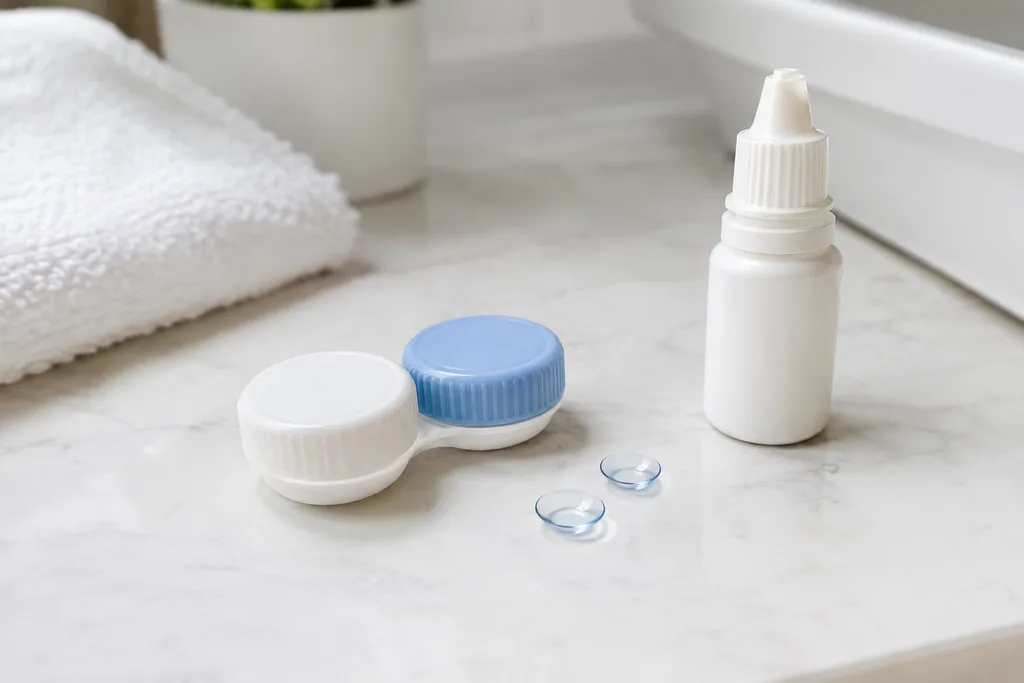
Generally, no — most lubricant drops and gels are meant to go in before you put your lenses in, or after you take them out, not while they're still on your eye. Soft contact lenses can absorb preservatives and other ingredients from a drop, which may irritate the eye or cloud the lens over time.
The American Academy of Ophthalmology's contact lens guidance recommends removing lenses before using eye drops unless your eye doctor has told you otherwise, or unless the product is specifically labeled as safe for use with lenses in (AAO). When we're asked about this at the shop, the first thing we point customers to is that one line on the Drug Facts label — it settles the question faster than any general rule can.
Which eye drops are safe with contacts in?
Only the ones whose label explicitly says so. Some rewetting drops are formulated for exactly this purpose, but a general lubricant gel or drop isn't automatically one of them just because it feels gentle. If the label is silent on contact lenses, treat that as a sign to take your lenses out, apply the product, and wait the length of time the label recommends before putting your lenses back in.
What Helps If Your Hands Shake When Using Eye Drops?
Shaky hands make it harder to land a drop, but a few adjustments reduce the number of attempts you need. Brace the hand holding the bottle against your forehead or cheekbone with the other hand, so both hands move together instead of one chasing the other.
Lying down flat, rather than standing and tilting your head back, removes the extra work your neck muscles do to hold position, which often settles a tremor. If you still struggle after trying these, ask a family member or caregiver to help, or ask your eye doctor about a drop-dispensing aid designed for unsteady hands — these exist specifically for this problem and are worth asking a pharmacist about.
When Should You Stop and See an Eye Doctor?
An over-the-counter lubricant eye gel or drop is meant for temporary relief of dryness, burning, or irritation — not for diagnosing or treating an underlying eye condition. Stop using the product and call an eye doctor if you notice eye pain, changes in vision, redness that doesn't improve, or symptoms that get worse or last more than 72 hours.
Anyone recovering from eye surgery, dealing with an eye injury or infection, caring for a child's eyes, or already using a prescription eye drop should check with an eye-care professional before adding an over-the-counter product, since combinations and timing can matter. MedlinePlus lists these same warning signs for ophthalmic lubricants as reasons to seek medical advice rather than continue self-treating.
Which Product Should You Reach For at Bedtime?
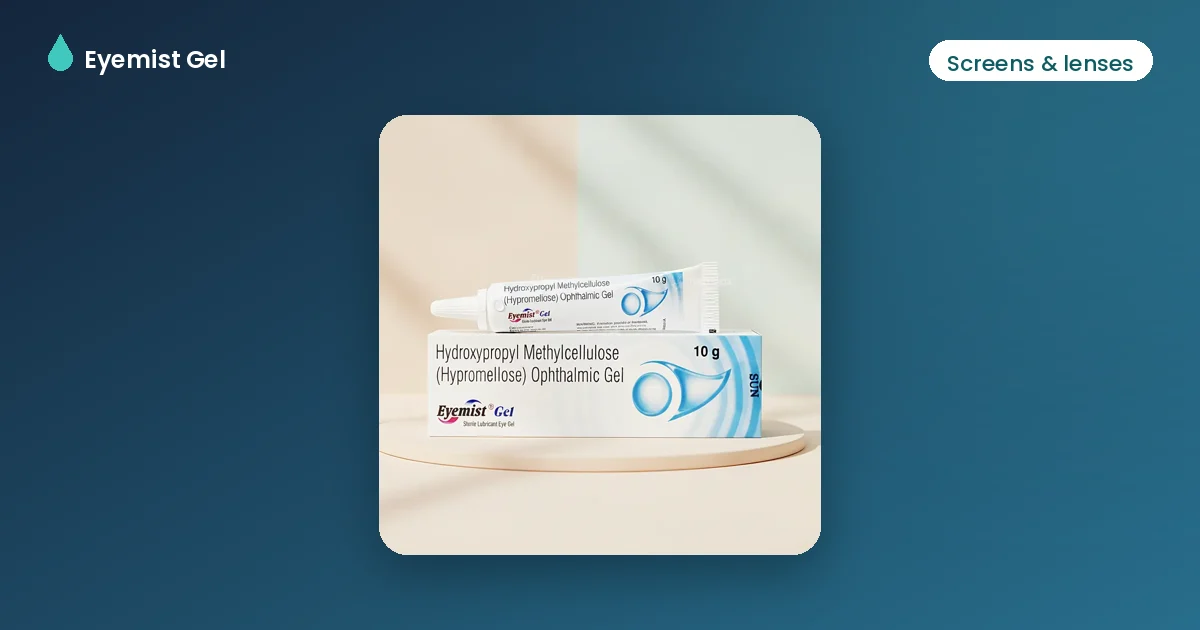
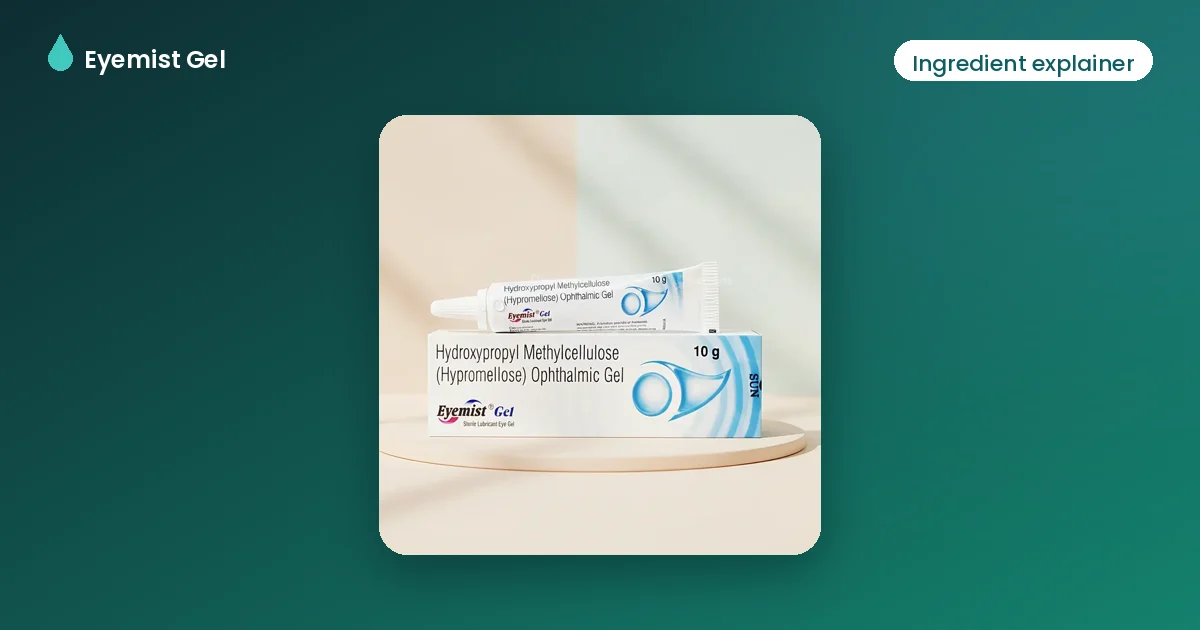
If your eyes feel dry mainly at night, or you wake up with that gritty feeling, a thicker gel that stays on the eye through sleep tends to be more practical than a fast-draining liquid drop. Eyemist Gel, a sterile lubricant eye gel with hypromellose 0.3%, is formulated for the temporary relief of dryness of the eye and goes in with the same technique described above — a short ribbon in the lower lid pocket, applied before bed when temporary blur won't get in the way of a screen or the road.
This article is for general information and is not medical advice. Always read and follow the product label, and talk to an eye doctor if your symptoms persist or worsen.
Related Articles
Frequently Asked Questions
Honest answers about Eyemist Gel — ingredients, how to use it, shipping, and returns.
Hold the bottle tip about an inch above your eye, pointed downward into the pocket formed by your pulled-down lower eyelid, and squeeze gently. Keeping that small gap between the tip and your eye protects both your eye and the bottle from contamination, since the dropper never needs to make contact to release a drop.
Yes. Close your eye gently right after the drop lands, and avoid blinking hard or rubbing, which can push the liquid out before it spreads across the eye's surface. Pressing lightly on the inner corner of your eye for about a minute also helps keep the drop from draining away too quickly.
Most guidance suggests waiting at least a few minutes, often three to five, between two different liquid eye drops so the second one doesn't rinse out the first before it has absorbed. If you're using a thicker gel along with a liquid drop, apply the liquid drop first and the gel last, since gel forms a layer that can block a drop from reaching the eye.
Usually not, unless the product's label specifically states it's safe for use with contact lenses in. Most lubricant drops and gels are meant to be applied after lenses are removed, since lenses can absorb ingredients from the formula and become irritating or cloudy over time.
Lie down flat and brace the hand holding the bottle against your forehead or cheekbone with your free hand, so both hands move as one unit instead of fighting each other. If a tremor still makes it hard to land drops reliably, ask a pharmacist about dispensing aids made for unsteady hands, or ask a family member to help.
Comments (0)
No comments yet. Be the first!