
Eye Makeup for Dry Eyes: How to Wear It Without Irritation
Eye makeup for dry eyes works best when you change where and how you apply it, not only which products sit in your bag. Keep liner and shadow away from the inner lash line, pick cream formulas over loose powder, skip glitter, and let your lubricant settle before you start. That order of operations cuts the friction and stray particles that tend to make dry, irritated eyes feel worse by the end of the day.
Key takeaways
- Placing liner just outside the lash line, instead of on the waterline, reduces how much product reaches the tear film.
- Cream and stick formulas shed fewer loose particles into the eye than powder eyeshadow or liner.
- Glitter and shimmer particles are among the hardest cosmetic materials to flush out once they land on the eye's surface.
- Discard eye makeup on a regular schedule and swap your mascara wand often to limit bacterial buildup.
- A lubricant drop or gel applied before makeup gives the eye surface a cushion; applied right after, it can smear a fresh look, so timing matters.
What Should You Check Before Applying Eye Makeup on Dry Eyes?
A few minutes of prep lowers the odds of irritation later, and it costs you nothing but attention. Before you open a single compact, run through this short checklist.
- Wash your hands and clean any brushes or sponges you plan to use.
- Check expiration dates on mascara, liner, and cream products; discard anything cloudy, separated, or more than a few months old.
- Remove contact lenses first if your routine or the lens instructions call for it, then reinsert after your face is finished.
- Confirm there's no active irritation — redness, pain, or discharge means this is a day to skip makeup and ask an eye doctor instead.
- Set aside 10–15 minutes so you're not rushing near the eye area, which is when smudging and rubbing happen.
How Do You Apply Eye Makeup Step by Step Without Irritating Dry Eyes?
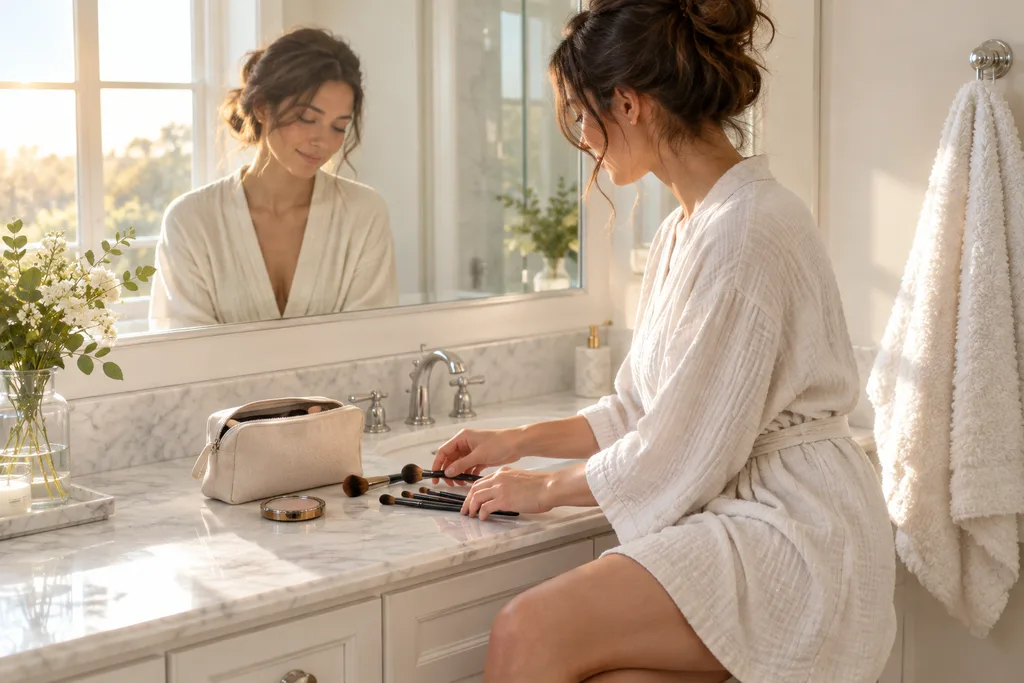
Follow these steps in order. Each one is a single action, so you can pause between them if your eyes need a moment.
- Apply a lubricant drop or gel first and let it absorb for a minute or two before touching the eye area.
- Use a cream or stick eyeshadow on the lid, blending with a clean finger or brush instead of a loaded powder puff.
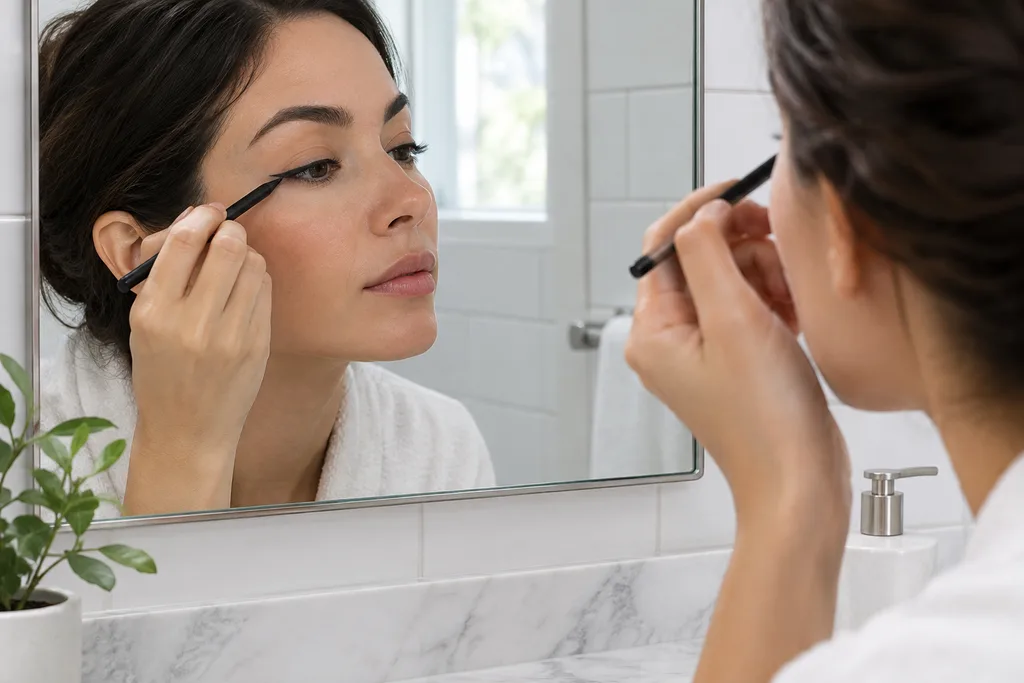
- Draw liner along the upper lash line from the outside edge, staying off the waterline and inner rim.
- Curl lashes before mascara rather than after, which reduces tugging on dry, sensitive lids.
- Load mascara on a clean wand and sweep from root to tip in one motion; avoid double-dipping the tube.
- Skip loose glitter or shimmer powders; if you want sparkle, use a cream-based shimmer applied with a finger.
- Blot, don't rub, if a product migrates — use a clean cotton swab at the outer corner.
How Far From the Lash Line Should Liner Go?
Lining the outer edge of the lid, just above the lash line, keeps pigment away from the tear film that coats the eye's surface. An experiment described by Healthline (2024) found that liner applied on the inner, waterline edge of the eye sent more cosmetic particles into tears than liner applied outside the lash line. For dry eyes, that difference in placement is the single biggest habit to change.
How Do You Remove Eye Makeup Without Making Dry Eyes Worse?
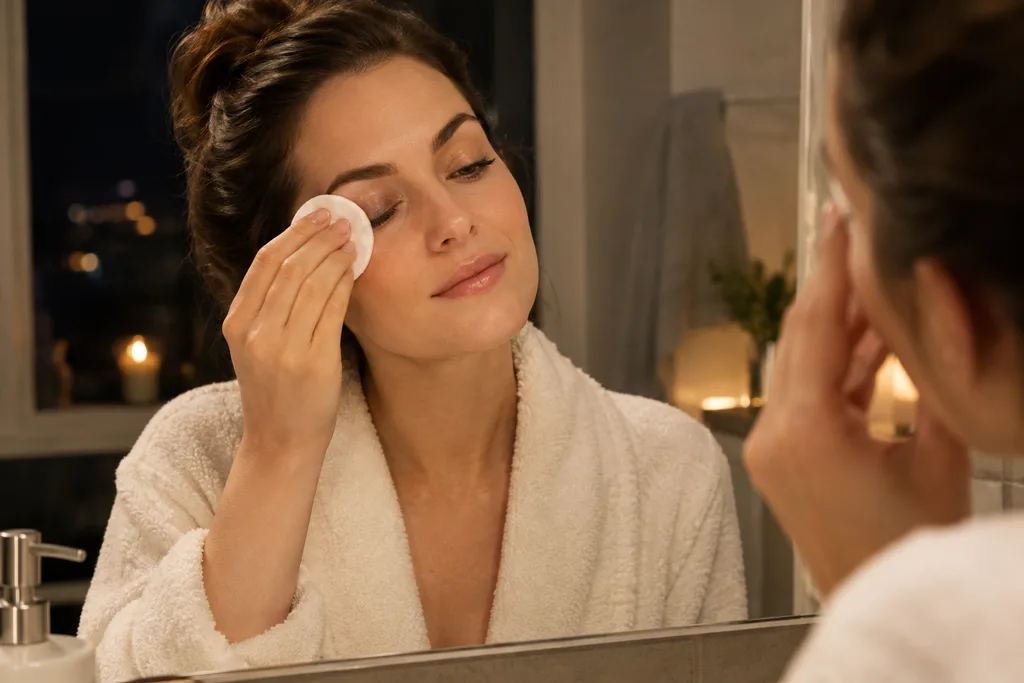
Removal matters as much as application. Dragging a dry cotton pad across the lid pulls on skin that's already sensitive, and sleeping in mascara lets flakes settle into the eye overnight. Soak a pad with a gentle, fragrance-free remover, press it against closed lids for several seconds, then wipe downward in one pass rather than scrubbing back and forth.
Rinse with plain water afterward and let the area air-dry before applying your nighttime lubricant. If your lids still feel gritty once makeup is off, that's a sign the formula or the removal method needs to change, not a reason to rub harder.
What Ingredients in Removers Should You Avoid?
Removers built on oils or added fragrance are more likely to sting already-dry eyes, and some oily formulas can leave a residual film across the eye's surface. Choosing a simple, fragrance-free, non-oil-based remover and testing a small patch first is a reasonable precaution for anyone with chronic dryness.
Why Avoid Glitter, and How Often Should You Replace Eye Makeup?
Glitter and shimmer particles are solid flecks, not pigment dissolved in a base, so they don't dissolve once they land on the eye. They can sit against the surface and cause scratching or a foreign-body feeling that lingers well after the particle is gone. For anyone managing dry eyes, that's reason enough to leave shimmer powders out of the routine or swap them for a cream-based alternative.
Old makeup is its own hazard. Mascara and liner that sit open for months collect bacteria every time the wand or tip touches the eye area, and a crumbling, dried-out formula sheds more flakes into the eye as it fails.
| Format | Particle risk near the eye | Best use for dry eyes |
|---|---|---|
| Loose powder shadow | Higher — particles can fall into the tear film | Use sparingly, away from the lash line |
| Cream or stick shadow/liner | Lower — stays where applied | Generally easier to tolerate |
| Glitter or shimmer powder | Highest — particles are solid and don't dissolve | Best avoided or replaced with cream shimmer |
How Often Should You Replace Eye Makeup?
As a general rule, replace mascara and liquid eyeliner every few months, and sooner if the product dries out, clumps, or changes smell. Mascara is the product that comes closest to the eye's surface most often, so it's worth treating as the item to be strictest about.
When Should You Use Lubricant Eye Gel Before or After Makeup?
Timing a lubricant around your makeup routine avoids both irritation and smearing. Apply a drop or a small amount of gel before you start, give it a minute or two to settle into the tear film, then begin your base and eye products once your vision has cleared.
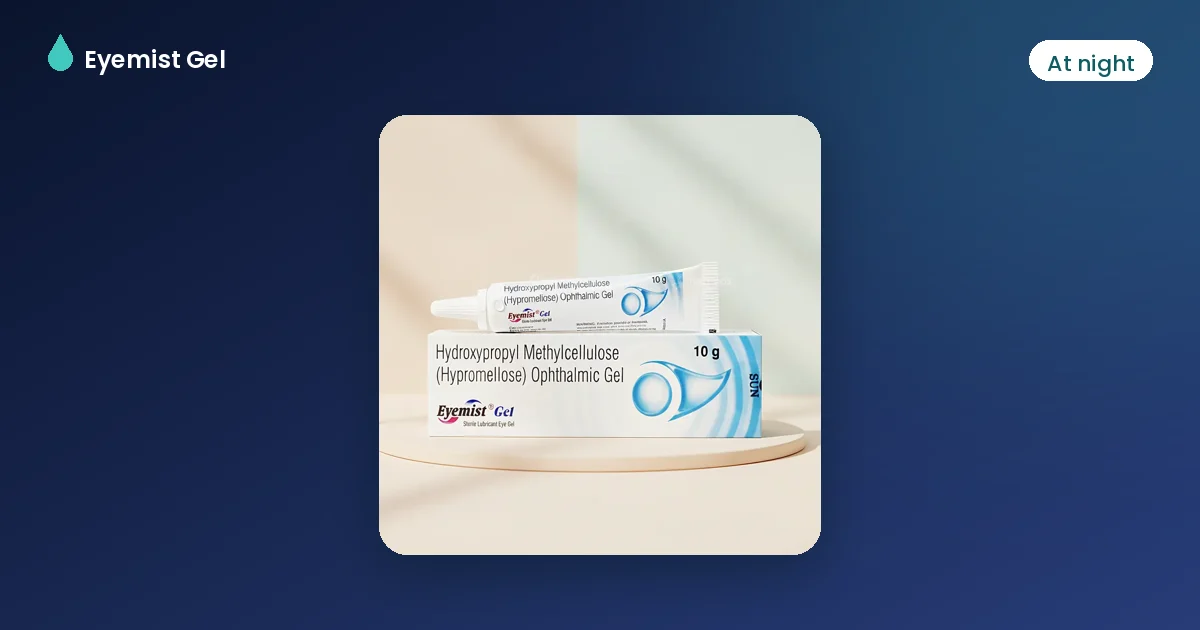
Using a thicker, longer-lasting gel at night, after makeup is fully removed, is a separate step from daytime touch-ups. A product like Eyemist Gel, a sterile hypromellose 0.3% lubricant eye gel, is intended for the temporary relief of dryness and works best applied right before bed, after your face is clean, following the directions on its label.
When Should You See an Eye Doctor About Eye Makeup and Dry Eyes?
Stop using eye makeup and any lubricant product, and call an eye doctor, if you notice eye pain, a change in vision, redness or irritation that doesn't ease up, or any symptom that gets worse or lasts more than 72 hours. These are not signs a different mascara will fix.
Anyone recovering from eye surgery, dealing with an eye injury or infection, caring for a child's eyes, or already using a prescription eye drop should check with an eye-care professional before adding new cosmetics or over-the-counter lubricants to the mix. The American Academy of Ophthalmology and MedlinePlus both note that persistent dryness can point to an underlying condition that needs a professional diagnosis, not just a makeup swap.
Where to Go From Here
The question we hear most from customers managing dry eyes isn't which mascara to buy — it's what to do about the gritty feeling by the time they take makeup off at night. A sterile lubricant used on a predictable schedule, alongside the placement and removal habits above, is a reasonable place to start. See the label and directions for the hypromellose 0.3% lubricant eye gel before adding it to your evening routine.
This article is for general information and is not medical advice. Always read and follow the product label, and talk to an eye doctor if your symptoms persist or worsen.
Related Articles
Frequently Asked Questions
Honest answers about Eyemist Gel — ingredients, how to use it, shipping, and returns.
Generally yes, if you adjust how you apply and remove it. Keep liner and shadow away from the waterline, choose cream over powder formulas, skip loose glitter, and remove everything gently at night. If your eyes are actively red, painful, or irritated, skip makeup that day and check with an eye doctor before resuming your routine.
Apply liner along the outer edge of the upper lash line, not on the inner waterline. Research on cosmetic particle migration has found that liner placed on the waterline sends more particles into the tear film than liner kept outside the lash line, which matters more for eyes that are already dry.
Cream and stick formulas for shadow and liner tend to shed fewer loose particles than powder products. Thickening mascara that doesn't flake, applied with a clean wand, is usually easier to tolerate than older, dried-out formulas. Fragrance-free, non-oil-based removers are a safer pairing than oily or heavily scented ones.
Apply a lubricant drop or gel before makeup and let it settle for a minute or two so your vision clears before you start. Using a lubricant right after finishing your makeup can smear liner or mascara, so save thicker, longer-lasting gels for your nighttime routine once makeup is fully removed.
Replace mascara every few months, and sooner if it dries out, clumps, or changes smell or texture. Mascara comes closer to the eye's surface than most other cosmetics, so an old or crumbling formula is more likely to flake into the eye and cause irritation.
Comments (0)
No comments yet. Be the first!