
The 20-20-20 Rule: Does It Really Help Your Eyes?

The 20 20 20 rule is a screen-break habit: every 20 minutes of near work, look at something at least 20 feet away for 20 seconds. It gives the eye's focusing muscles a rest and gives you a natural cue to blink, which is why eye doctors often mention it as a simple way to ease digital eye strain.
Key takeaways
- The rule pairs a 20-minute screen interval with a 20-second look at something 20+ feet away.
- It mainly relaxes the eye's focusing muscle and prompts a few full blinks, not a vision cure.
- Evidence is limited but consistent enough that major eye-health groups recommend it as one strain-reduction habit among several.
- Pairing the break with deliberate blinking and, if needed, a lubricant drop or gel can address the dryness part of the problem.
- Persistent pain, blur or redness is a reason to stop self-managing and call an eye doctor.
What Is the 20-20-20 Rule and Why Does It Target Screen Time?
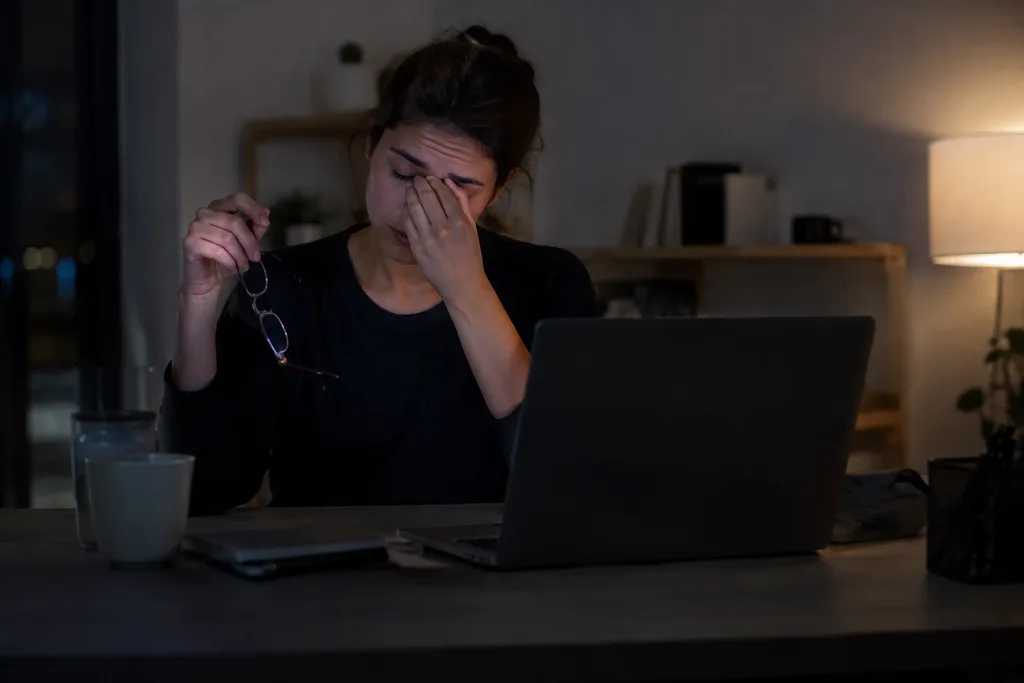
When you stare at a monitor, your eye's focusing muscle — the ciliary muscle — stays contracted for long stretches instead of flexing and relaxing the way it does during normal, varied-distance viewing. At the same time your blink rate drops, sometimes by half or more, which lets the tear film dry out faster. The 20-20-20 rule interrupts both problems at once by forcing a distance shift and a pause.
Optometrist the American Optometric Association describes this cluster of symptoms as computer vision syndrome, or digital eye strain — tired, burning eyes, blurred vision, headaches and a stiff neck after hours on a screen. The rule is not a treatment for any eye disease; it is a work habit, the same category as taking a stretch break every hour.
What Counts as "Looking Away" During a 20-20-20 Break?
A valid break means shifting your gaze to an object roughly 20 feet away or farther — a tree outside a window, a sign across the room, the far wall of an office. At that distance, light entering the eye is close to parallel, so the focusing muscle can finally let go instead of holding a near-focus contraction.
You don't need a tape measure. If you can't judge 20 feet exactly, aim farther rather than closer — looking at something across a parking lot works just as well as something exactly 20 feet away.
How Far Away Does "20 Feet" Really Need to Be?
Close is not close enough. Looking at a water bottle on your desk, a phone in your hand, or a wall two feet away keeps the focusing muscle contracted almost as much as the screen did. The point is distance, not direction — looking up at a close ceiling doesn't count, but looking out a window ten rooms away does.

How Do You Turn the 20-20-20 Rule Into a Daily Habit?
Before you start, gather what you need: a phone, computer, or kitchen timer; a clear sight line to something far away (a window, hallway, or open room); and, if you wear contact lenses, keep them in — the rule works the same whether or not lenses are in. People recovering from eye surgery or with an existing eye condition should ask their eye doctor before building any new screen-habit routine.
- Set a repeating 20-minute timer. Use your phone's clock app, a browser timer, or a sticky note on your monitor as a backup.
- Keep working normally until the timer sounds. Don't try to watch the clock yourself — that defeats the point of a reminder.
- Stop typing or reading the instant the alert goes off. Push your chair back slightly so you're not tempted to keep glancing at the screen.
- Find an object at least 20 feet away and focus on it. A tree, a sign, or the far end of a hallway all work.
- Hold that gaze for about 20 seconds and blink fully several times. Full blinks — not partial ones — spread tears across the eye's surface.
- Return to your screen and restart the 20-minute timer. Repeat for the length of your work session.
Which Timer Setup Works Without Installing an App?
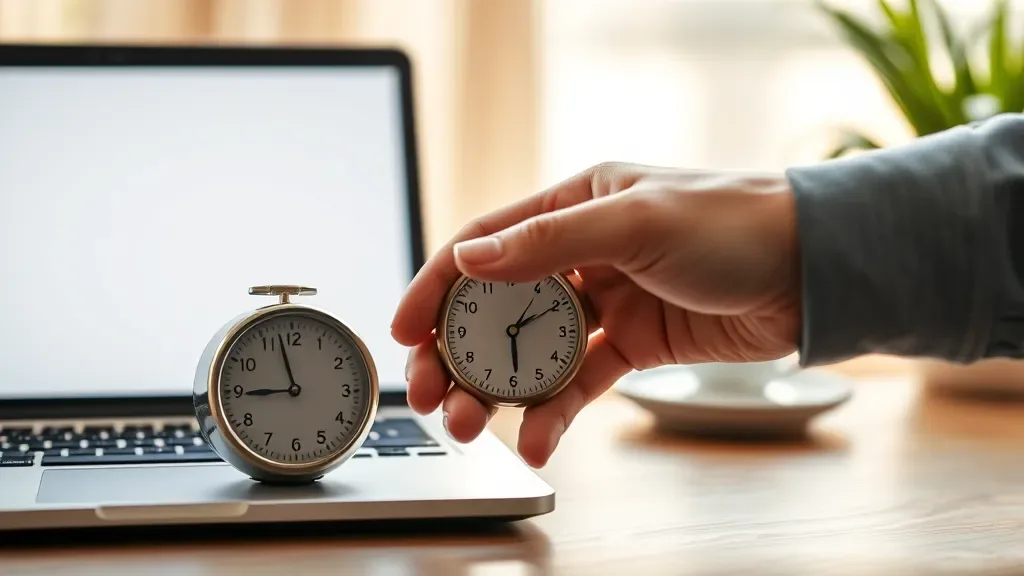
A basic kitchen timer or your phone's built-in clock app, set to repeat every 20 minutes, does the job without downloading anything. If you'd rather automate it, free browser-based timers can run in a background tab and flash a notification when a break starts — useful if you tend to lose track of time during deep focus work.
What Does the Research Say About the 20-20-20 Rule?
Direct clinical evidence on the exact 20-20-20 schedule is limited, but what exists points the same direction. A 2020 study of patients at a university eye clinic who were advised to follow the 20-20-20 pattern found little change in self-reported strain after a short follow-up period, but a clinical tear-film test showed a measurable improvement, reported in the African Vision and Eye Health Journal (2020). That split result — comfort scores barely moved, tear stability did — is a good reason to treat the rule as one piece of a strain-reduction routine, not a stand-alone fix.
Broader guidance from the American Academy of Ophthalmology notes that screens themselves don't damage eyesight, but extended near work without breaks reliably produces strain symptoms, and that any regular break from repetitive close focus helps.
How Does the 20-20-20 Rule Compare With Other Break Schedules?
| Approach | Interval | Focus distance | What it mainly addresses |
|---|---|---|---|
| 20-20-20 rule | Every 20 minutes | 20+ feet, 20 seconds | Focusing-muscle fatigue, low blink rate |
| Hourly stretch break | Every 60 minutes | Not distance-specific | Posture, neck and back fatigue |
| No scheduled break | None | None | Addresses nothing; strain tends to build through the day |
None of these replaces the others — a 20-20-20 cycle plus a longer stand-up break each hour covers more ground than either alone.
How Do Blinking and a Lubricant Eye Gel Fit Into the Routine?
The 20-20-20 rule relaxes focusing muscles, but it only partly fixes dryness — the real fix for a dried-out tear film is blinking fully and, when that's not enough, adding a lubricant. During each break, blink completely several times instead of just glancing at the distant object; a partial blink doesn't spread tears over the whole eye surface.
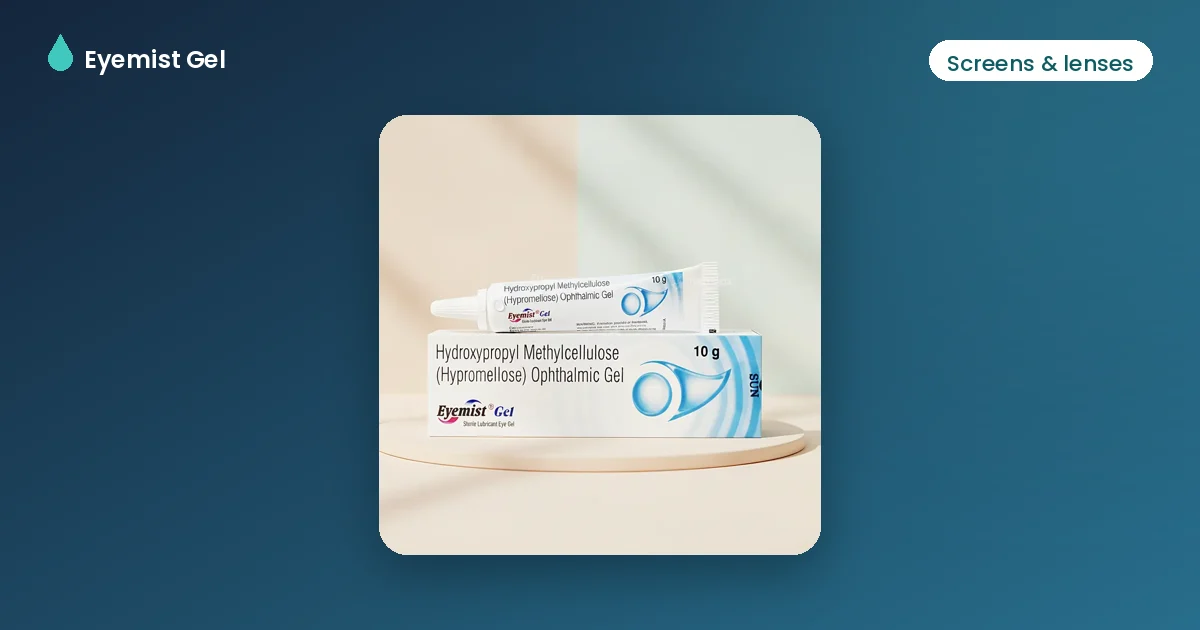
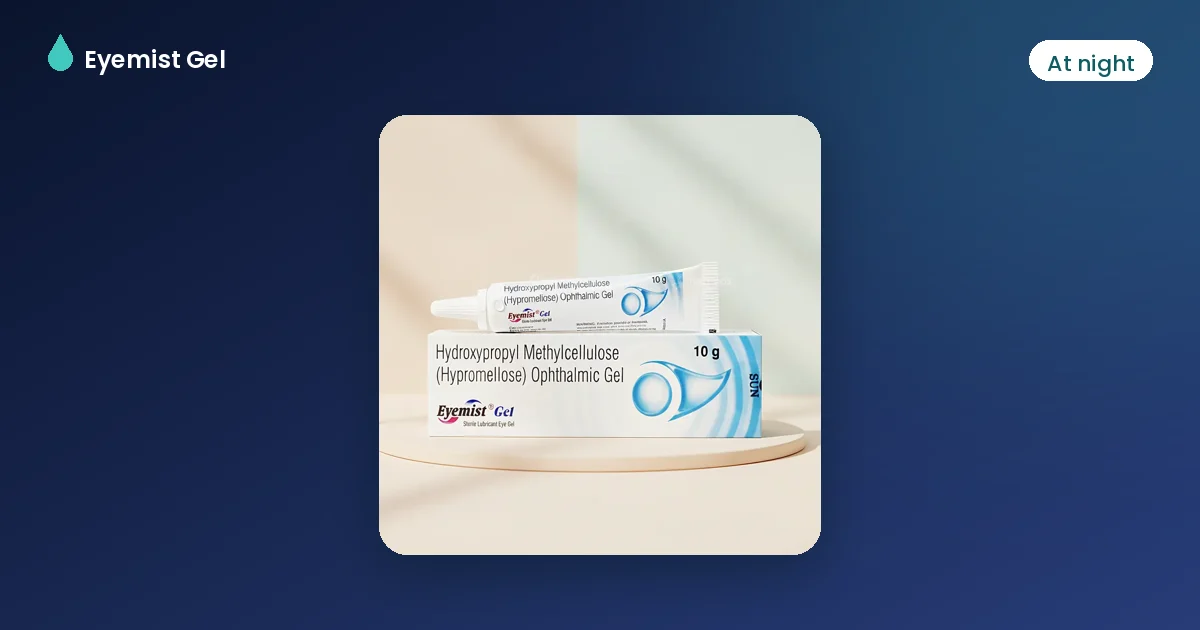
If your eyes still feel dry, gritty or tired by late afternoon even with regular breaks, a lubricant eye gel can help for the temporary relief of that dryness between breaks. Eyemist Gel, a sterile hypromellose 0.3% lubricant eye gel, is designed for exactly that kind of temporary symptom relief — follow the directions and warnings printed on its label, since gels can blur vision briefly right after use.
How Often Can You Use a Lubricant Eye Gel With This Routine?
Follow the directions printed on the product's Drug Facts label rather than a personal schedule — don't use more or more often than the label allows for faster relief. Many people apply a lubricant gel before bed since it's thicker and can blur vision for a short time, and a thinner drop during the day; check the label on the specific product you're using to confirm.
When Should You See an Eye Doctor Instead of Relying on Eye Breaks?
Screen breaks and a lubricant gel address temporary strain and dryness, not an underlying eye condition. Stop self-managing and see an eye doctor if you have eye pain, any change in vision, redness or irritation that doesn't improve, or symptoms that get worse or last more than 72 hours. Anyone who has had eye surgery, has an eye injury or infection, is caring for a child's eye symptoms, or already uses prescription eye drops should ask an eye-care professional before starting a new routine or product. For general background on dry eye symptoms and causes, MedlinePlus is a reliable starting point.
When we hear from customers who've already tried screen breaks and still feel dry by evening, the next question we usually ask is what the label of their current lubricant actually says about strength and how often it can be used. If you want a simple option to pair with a 20-20-20 habit, see the hypromellose lubricant eye gel page for its full label details before buying.
Eyemist Gel is an independent product and is not manufactured by, affiliated with, sponsored by, or endorsed by Alcon Inc. GenTeal® is a registered trademark of Alcon Inc. References are for identification and comparison only; products may differ in inactive ingredients, formulation and performance. This article is for general information and is not medical advice. Always read and follow the product label, and talk to an eye doctor if your symptoms persist or worsen.
Related Articles
Frequently Asked Questions
Honest answers about Eyemist Gel — ingredients, how to use it, shipping, and returns.
It's a screen-break habit: every 20 minutes spent looking at a screen, look at something at least 20 feet away for about 20 seconds. The distance gaze lets the eye's focusing muscle relax, and the pause naturally prompts a few full blinks, both of which help ease digital eye strain from long near-work sessions.
Research on the exact schedule is limited, but existing studies and major eye-health organizations support it as one useful habit among several. A 2020 clinical study found it improved tear-film stability measurably even when self-reported comfort barely changed, suggesting it helps the dryness side of strain more clearly than the discomfort side.
Set a repeating 20-minute timer on your phone, computer clock app, or a free browser-based timer, and let the alert interrupt you rather than trying to track time yourself. A sticky note on your monitor as a backup reminder also helps on days you silence notifications.
Not entirely. It helps by encouraging full blinks and relaxing focusing muscles, but it doesn't add moisture to the eye's surface. If dryness continues despite regular breaks, a lubricant eye drop or gel used for temporary relief, following its label directions, addresses that part more directly.
Not precisely — the goal is distance, not a measured number. Looking at anything roughly 20 feet away or farther, such as a tree outside a window or a sign across a room, lets light entering the eye become nearly parallel, which is what allows the focusing muscle to relax.
Comments (0)
No comments yet. Be the first!